
If you have ever scrubbed a toilet bowl only to find stubborn brown or white rings that refuse to come off, you are dealing with hard water stains. Learning how to remove hard water stains from toilet surfaces requires the right method for the specific deposit not just more scrubbing. This guide explains what causes mineral buildup in toilet bowls, which cleaning methods actually work (vinegar, baking soda, pumice stone, and commercial options), and how to tell hard water stains from rust or mold. It also covers what to avoid, since the wrong approach can damage the toilet surface permanently.
Quick answer: To remove hard water stains from a toilet, pour white vinegar into the bowl and let it sit for at least 30 minutes (or overnight for stubborn deposits), scrub with a toilet brush, and flush. For heavier calcium and limescale buildup, a baking soda paste or a wet pumice stone designed for toilets can help lift mineral deposits. Always check the toilet surface material before using abrasive tools, and never mix vinegar with chlorine bleach.
What Causes Hard Water Stains in Toilets?
Hard water contains dissolved minerals primarily calcium and magnesium that are picked up as water passes through rock and soil. When hard water sits in your toilet bowl or flows through the tank and rim jets, those minerals are left behind as the water evaporates or drains. Over time, this mineral residue builds up into the white, brown, or grey deposits you see at the waterline and below.
Why stains get worse over time: Every flush adds a thin new layer of mineral deposit on top of the existing buildup. What starts as a faint ring becomes a thick, rough crust that adheres strongly to the porcelain surface. The longer deposits are left untreated, the harder they are to remove.
Mineral deposits vs other stains: Not every toilet stain is caused by hard water. It is important to distinguish between them before choosing a cleaning method:
- Hard water / mineral deposits: White, grey, or brown rings at the waterline; chalky or crusty texture; common below the rim jets and around the trap; worsens gradually over time.
- Rust stains: Orange-brown streaks or patches; often more vivid in color; caused by iron in the water or by aging metal parts inside the tank. Rust stains require a rust-specific cleaner acid-based products like oxalic acid not vinegar or baking soda alone.
- Mold or mildew: Dark green, black, or pinkish growth; visible especially under the rim; caused by moisture and inadequate ventilation. Mold requires a disinfecting cleaner appropriate for the surface not an acid descaler.
- General discoloration from cleaning products: Some blue, green, or pink tints result from residue from toilet drop-in tabs or incompatible cleaners.
Identifying the stain correctly saves time and prevents using a method that will not work or one that could make the problem worse.
How to Remove Hard Water Stains from Toilet Safely
Before applying any cleaning product, take a few minutes to prepare properly. Rushing this step leads to the most common toilet-cleaning mistakes.
Preparation checklist:
- Identify the toilet bowl material. Most modern residential toilets have vitreous china (glazed porcelain) surfaces. Some specialty toilets have colored glazes, coatings, or finishes that require gentler cleaning.
- Check the manufacturer’s care instructions if available these take priority over any general cleaning guidance.
- Put on rubber or nitrile gloves to protect your hands from cleaning products and from the stain-causing minerals themselves.
- Open a window or turn on the bathroom fan. Good ventilation is important when using any cleaning products, particularly acids like vinegar or commercial descalers.
- Gather your supplies before you start switching cleaners mid-process can cause accidental mixing of incompatible chemicals.
Basic Tools and Supplies for Removing Toilet Hard Water Stains
| Supply | Purpose |
|---|---|
| White distilled vinegar | Acid that dissolves calcium and mineral deposits |
| Baking soda (bicarbonate of soda) | Mild abrasive; combined with vinegar for fizzing action |
| Toilet brush (stiff bristles) | Scrubbing after chemical treatment |
| Pumice stone (toilet-safe, wet-use only) | Manual removal of heavy mineral crust from compatible surfaces |
| Commercial limescale remover | Stronger acid solution for heavy buildup; follow label instructions |
| Rubber or nitrile gloves | Hand protection |
| Spray bottle | Applying vinegar solution to rim and above-waterline areas |
| Old towels or paper towels | Soaking vinegar against stains above the waterline |
How to Remove Hard Water Stains from Toilet with Vinegar
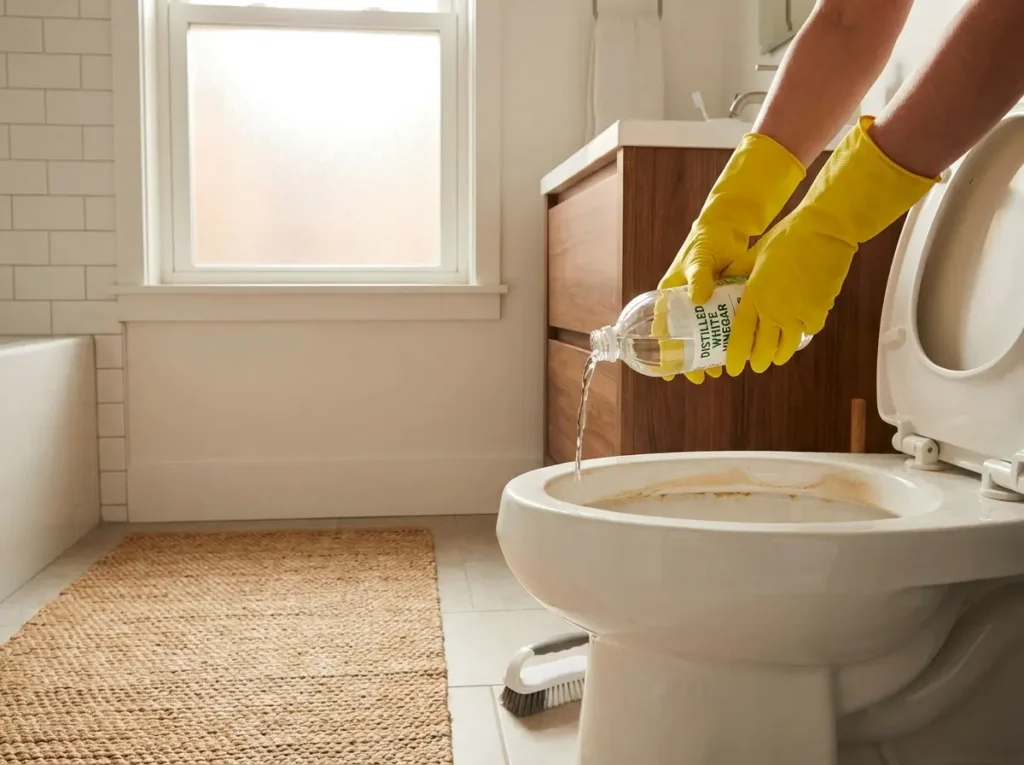
White distilled vinegar is a mild acetic acid solution. When it contacts calcium carbonate and magnesium carbonate the main components of hard water mineral deposits the acid reacts with the minerals and helps dissolve or loosen them. This makes vinegar one of the most useful household options for how to remove hard water stains from toilet surfaces, particularly for light to moderate buildup.
Will Vinegar Remove Hard Water Stains in Toilet?
Vinegar can remove light to moderate hard water stains from toilet bowls. For fresh or mild deposits, a 30-minute soak followed by scrubbing is often sufficient. For older or thicker mineral buildup, an extended soak (several hours or overnight) works better, though even a prolonged soak may not fully remove very heavy calcium crust.
What vinegar will not do:
- It will not remove rust stains effectively rust requires oxalic acid or a rust-specific product.
- It will not disinfect or sanitize a toilet bowl on its own. The U.S. EPA maintains a list of registered disinfectants; vinegar is not on it.
- It may not be sufficient for stains that have been building up for years.
For serious limescale that does not respond to vinegar, a commercial acid-based descaler or a wet pumice stone may be necessary.
Step-by-Step Vinegar Method How to Remove Hard Water Stains from Toilet
- Lower the water level in the bowl. Turn off the shut-off valve behind the toilet and flush once this empties most of the water from the bowl, allowing the vinegar to contact the stains directly rather than being diluted. Alternatively, pour a bucket of water into the bowl quickly to force the existing water down before adding vinegar.
- Pour 2–3 cups of undiluted white vinegar into the bowl. Make sure it reaches the stained areas. Swish with the toilet brush to coat the sides.
- For stains above the waterline or under the rim: Soak paper towels or strips of old cloth in white vinegar and press them firmly against the stained areas. This keeps the acid in contact with the mineral deposit.
- Allow to sit for at least 30 minutes. For stubborn or old deposits, leave the vinegar in the bowl for several hours or overnight. It is generally safe to leave white vinegar in a toilet bowl overnight the mild acid will continue working on mineral deposits without damaging standard vitreous china.
- Sprinkle baking soda into the bowl and scrub with a stiff toilet brush, paying attention to the waterline ring, below the rim jets, and around the trap.
- Flush to rinse. Turn the shut-off valve back on if you closed it.
- Repeat if needed. Heavy buildup may require two or three treatments over consecutive days.
Safety reminder: Never add chlorine bleach to the toilet bowl while vinegar is still present. Mixing vinegar (or any acid) with chlorine bleach produces chlorine gas, which is toxic. If you use bleach on your toilet at any point, rinse the bowl thoroughly with water and allow time before using vinegar. Contact Poison Control at poison.org immediately if accidental chemical mixing occurs.
How to Remove Hard Water Stains from Toilet with Baking Soda
Baking soda (sodium bicarbonate) is a mild alkali with gentle abrasive properties. On its own, it can help scrub light surface stains when made into a paste. Combined with vinegar, it produces a fizzing reaction — but it is worth understanding what that fizz actually does.
Can You Combine Baking Soda and Vinegar?
When baking soda and vinegar meet, they react chemically to produce carbon dioxide gas — that is the fizz. The reaction is energetic and produces water and carbon dioxide, which is harmless. However, the fizzing action itself does not dramatically increase cleaning power compared to using vinegar alone. The main benefit is mechanical: the bubbles help agitate loose mineral particles and can help the vinegar penetrate porous deposits. The fizzing also neutralizes some of the vinegar’s acidity, so for maximum acid action on mineral deposits, it is more effective to let the vinegar soak first, then add baking soda to scrub.
Effective combined method:
- Pour 1–2 cups of white vinegar into the bowl and let it soak for 30 minutes.
- Sprinkle ½ cup of baking soda into the bowl allow the fizzing to occur.
- Scrub immediately with a toilet brush while the fizzing is active.
- Leave for another 10–15 minutes, then flush.
This approach uses both the acid-dissolving effect of vinegar and the mild abrasive effect of baking soda without wasting either ingredient’s cleaning action.
For a paste on stubborn spots above the waterline: Mix baking soda with just enough water (or vinegar) to form a thick paste. Apply directly to the stain, press a soaked paper towel over it, and leave for 30–60 minutes before scrubbing.
Pumice Stone for Toilet: Does It Work?
A pumice stone is a naturally porous volcanic rock with a mild abrasive surface. When used correctly on a compatible toilet surface, it can physically scrape away thick mineral crust that chemical methods alone cannot fully dissolve.

Does a pumice stone work for toilet hard water stains? Yes, for stubborn calcium and limescale deposits on standard glazed vitreous china toilet bowls. The pumice stone physically abrades the mineral layer off the surface. Southern Living and other cleaning publications report positive results with toilet-safe pumice stones, particularly for heavy buildup below the waterline.
Before you use a pumice stone:
- Confirm your toilet bowl has a standard glazed vitreous china surface. Most US residential toilets do, but specialty finishes, colored coatings, plastic toilet inserts, and some newer surface treatments may scratch. Test in a hidden area first inside the trap or at the very bottom of the bowl.
- Never use a dry pumice stone. A dry pumice stone will scratch even a standard porcelain surface. Both the stone and the toilet surface must be wet throughout the entire process.
- Do not use a standard pumice stone sold for foot care these are often coarser. Use a pumice stone specifically marketed for toilet bowl cleaning, which is formulated to be gentle enough for porcelain.
Step-by-step pumice stone method:
- Wet the pumice stone thoroughly in water.
- Keep the toilet bowl surface wet flush or add water if needed.
- Rub the wet pumice stone gently over the stained area using light, circular strokes. Do not press hard.
- Keep both the stone and the surface wet at all times. If you hear scraping or feel resistance, add more water immediately.
- Rinse periodically to check progress.
- Flush to remove loosened mineral debris.
When NOT to use a pumice stone:
- On colored, coated, or non-standard toilet bowl finishes.
- On plastic toilet inserts or under-rim plastic parts.
- If the toilet bowl surface already has visible scratches a pumice stone will worsen existing damage.
- On toilet tanks, seat hardware, or any external fixtures.
How to Remove Hard Water Stains from Toilet Naturally
For homeowners who prefer to avoid commercial chemical cleaners, there are several effective approaches to how to remove hard water stains from toilet bowls using household ingredients.
Natural methods summary:
- White vinegar soak (described above) — the most effective natural option for mineral deposits
- Baking soda paste — useful for surface scrubbing and light stains
- Lemon juice — contains citric acid, similar in principle to vinegar but typically more expensive for toilet use; works best on light deposits
- Cream of tartar — mildly acidic; can be mixed with hydrogen peroxide for a paste on above-waterline stains
None of these natural options disinfect a toilet bowl. If disinfection is a goal, a separate EPA-registered disinfectant is needed after the stain removal step.
How to Remove Hard Water Stains from Toilet Without Vinegar
If you prefer not to use vinegar due to the smell, sensitivity concerns, or surface compatibility these alternatives can help:
- Baking soda paste alone: Mix to a thick consistency and apply to stains. Scrub after 30 minutes. Effective for mild surface buildup.
- Commercial limescale remover: Products designed specifically for toilet limescale (such as CLR Calcium, Lime & Rust Remover, or similar) contain stronger acids (typically citric acid or hydrochloric acid at low concentrations). Follow the product label instructions exactly, including contact time and ventilation requirements. Never mix commercial cleaners with any other product.
- Borax: Pour ½ cup into the bowl, let sit for 30 minutes, scrub, and flush. Some users find this effective for moderate deposits. It is a naturally-occurring mineral compound rather than a synthetic chemical.
- Pumice stone: As described above no chemicals required at all for physically removing heavy mineral crust.
How to Get Rid of Brown Hard Water Stains in Toilet
Brown staining in a toilet bowl is not always caused by hard water alone. Iron in the water supply oxidizes when it contacts air and leaves orange-brown rust deposits, which can look similar to heavy calcium buildup. Identifying the stain correctly is the first step:
- Brown hard water (calcium/limescale): Rough, chalky texture; often appears as a ring at the waterline; lighter brown or grey-brown color.
- Rust stains (iron deposits): Brighter orange-brown; smoother texture; may appear as streaks running down from rim jets or from the tank fill valve.
For brown mineral (hard water) deposits, the vinegar soak and pumice stone methods described above are appropriate. For rust-dominant staining, an oxalic acid-based cleaner (like Bar Keepers Friend) is more effective than vinegar. Some toilets have a combination of both treat the mineral component first, then address any remaining rust with an appropriate product.
What NOT to use on brown toilet stains:
- Chlorine bleach: bleach does not dissolve mineral deposits and can actually set some stains, making them harder to remove.
- Harsh wire brushes or metal scrapers these scratch the porcelain glaze, creating rough areas where future stains build up faster.
How to Prevent Hard Water Stains in Toilet
Preventing mineral buildup is significantly easier than removing it once it has hardened. Regular maintenance keeps deposits from accumulating to the point where they require extensive treatment.
Toilet Hard Water Stain Prevention Checklist
| Maintenance Task | Suggested Frequency | Purpose | Important Notes |
|---|---|---|---|
| Clean toilet bowl with mild cleaner or vinegar | Weekly | Prevent mineral deposits from hardening | Consistency matters more than product strength |
| Check under rim for buildup around rim jets | Monthly | Mineral deposits here reduce flush efficiency | Use a small brush or cloth with vinegar |
| Pour 1–2 cups of vinegar into bowl | Monthly | Dissolve thin mineral film before it thickens | Leave overnight; flush in the morning |
| Inspect toilet tank interior | Every 3–6 months | Mineral buildup in the tank affects parts and water quality in the bowl | Turn off water; flush to empty; inspect fill valve and flapper |
| Clean rim jets with vinegar-soaked cloth | Every 3–6 months | Blocked jets from limescale reduce flush coverage | Use a small tool to clear blocked holes if needed |
| Use a toilet bowl cleaning tablet (non-bleach, mineral-targeting type) | As per product label | Slow ongoing mineral buildup between manual cleans | Avoid drop-in bleach tabs these can damage rubber flapper valves over time |
San Jose and much of the Bay Area is served by water sources with varying hardness levels depending on the local supply mix and season. If you notice stains forming quickly after cleaning, your water may be harder than average checking your local water utility’s annual water quality report can confirm mineral content levels for your area.
Common Toilet Cleaning Mistakes to Avoid
Knowing how to remove hard water stains from toilet surfaces also means knowing what not to do. These are the most frequent errors that damage toilets or fail to solve the problem:
- Using chlorine bleach to remove mineral stains. Bleach is a disinfectant, not a descaler. It does not dissolve calcium or limescale and can lock in some mineral stains. Reserve bleach for disinfection purposes only, in a separate step from descaling, with thorough rinsing in between.
- Mixing cleaning products. Never combine bleach with vinegar, ammonia, or other cleaning agents in the toilet bowl or in the same cleaning session without thorough rinsing between products. The resulting chemical reactions can release toxic gases. If in doubt, flush the bowl multiple times with water between products.
- Using a dry pumice stone or abrasive scrubber. A dry pumice stone scratches porcelain. Metal scrapers and wire brushes damage the glaze permanently, creating rough surfaces where future stains accumulate even faster. Always use appropriate tools, kept wet throughout.
- Leaving commercial cleaners on longer than instructed. Strong acid-based commercial descalers work quickly. Leaving them on significantly longer than the label recommends can damage the toilet surface or seals. Follow product instructions.
- Ignoring stain type. Using vinegar on rust stains or bleach on mineral deposits wastes time and products. Correctly identify the stain before choosing a method.
- Skipping the tank. The toilet tank is a source of ongoing mineral deposits that re-enter the bowl with every flush. Cleaning the bowl without periodically inspecting and cleaning the tank means the problem keeps returning.
- Inadequate ventilation. Vinegar fumes are mild but unpleasant. Commercial descalers can be stronger. Always ensure good bathroom ventilation open a window or run the exhaust fan during and after toilet cleaning.
- Assuming one treatment will remove years of buildup. Heavy mineral deposits that have hardened over months or years may require multiple treatments over several days. Set realistic expectations and repeat the process rather than applying stronger chemicals.
When to Remove Hard Water Stains from Toilet with Professional Help
How to Remove Hard Water Stains from Toilet — When DIY Is Not Enough
There are situations where calling a professional cleaning service makes more practical sense than continuing with DIY methods:
- Stubborn buildup that does not respond to repeated vinegar, baking soda, pumice, or commercial descaler treatments. Some toilets in older homes have decades of mineral accumulation at a certain thickness, DIY methods are insufficient.
- Multiple bathrooms requiring detailed cleaning at once. Managing thorough bathroom deep cleaning across several bathrooms simultaneously is time-intensive.
- Move-in or move-out cleaning where bathroom condition affects a rental security deposit. Under California Civil Code §1950.5, a landlord may only deduct cleaning costs from a security deposit if the property was not returned in the condition it was rented. A professionally documented clean reduces this risk.
- Property management and rental properties where consistent bathroom condition needs to be maintained between tenancies.
- Time constraints homeowners and busy renters who want reliable results without spending hours on bathroom cleaning.
Jales Cleaning Services provides deep cleaning and regular cleaning for homes across San Jose, Fremont, Mountain View, Palo Alto, Cupertino, Campbell, Milpitas, and Menlo Park.
Note: A general house cleaning service handles bathroom maintenance, surface cleaning, and overall sanitation. For specialized plumbing-related mineral issues inside the toilet tank’s internal components (corroded fill valves, damaged flappers), a licensed plumber is the appropriate professional to contact.
Frequently Asked Questions About How to Remove Hard Water Stains from Toilet
How do you remove hard water stains from a toilet?
Pour 2–3 cups of white vinegar into the bowl, let it sit for at least 30 minutes (longer for heavy buildup), scrub with a toilet brush, and flush. For stubborn mineral deposits, sprinkle baking soda into the bowl after the vinegar soak and scrub while the mixture fizzes. For very heavy calcium crust, a wet pumice stone designed for toilets can help remove buildup mechanically. Always identify the stain type first rust and mold require different treatments than hard water deposits.
Will vinegar remove hard water stains in a toilet?
Yes, for light to moderate mineral deposits. White vinegar’s mild acidity dissolves calcium carbonate and similar minerals. For heavy buildup, an overnight soak gives better results than a short one. Very thick, long-established mineral crust may require a commercial descaler or a wet pumice stone in addition to vinegar.
How do you remove hard water stains from a toilet naturally?
The most effective natural methods are a white vinegar soak (the most reliable), a baking soda paste for scrubbing, lemon juice (similar acid to vinegar), and a wet pumice stone for heavy deposits (no chemicals required). None of these methods disinfect the toilet use a separate EPA-registered disinfectant if disinfection is needed.
Can baking soda remove hard water stains from a toilet?
Baking soda works best as a mild abrasive scrub rather than a chemical descaler on its own. It is most effective when combined with vinegar the fizzing action helps agitate mineral particles or as a paste applied directly to stains above the waterline. For heavy mineral deposits, baking soda alone is typically insufficient; vinegar or a commercial descaler is more effective.
How do you remove hard water stains from a toilet without vinegar?
Options include a baking soda paste, a wet pumice stone (for compatible porcelain surfaces), a commercial limescale remover such as CLR or a similar acid-based product, or borax. Follow all product label instructions and ensure adequate ventilation. Never mix any of these products with each other or with bleach.
Is a pumice stone safe for toilet bowls?
A pumice stone is safe for standard glazed vitreous china toilet bowls when used correctly always wet, with light pressure. It is not safe on colored coatings, specialty finishes, plastic parts, or already-scratched surfaces. Test in an inconspicuous area first. Use only a pumice stone specifically designed for toilet bowl cleaning, not a dry cosmetic pumice stone.
How do you get rid of brown hard water stains in a toilet?
Brown toilet stains can be mineral deposits (calcium/limescale) or rust (iron deposits). For brown hard water mineral stains, the vinegar soak method or a commercial descaler works best. For rust-dominant staining, use an oxalic acid-based cleaner (such as Bar Keepers Friend) rather than vinegar. For stains that contain both mineral and rust components, treat the mineral layer first with vinegar, then address any remaining rust with an appropriate rust remover. Do not use chlorine bleach on brown stains it does not dissolve minerals and can set rust stains.
How long should vinegar sit in a toilet bowl?
For light stains, 30 minutes is often sufficient. For moderate buildup, 1–2 hours gives better results. For heavy or old mineral deposits, leaving vinegar in the bowl overnight is a commonly recommended approach and is generally safe on standard vitreous china toilet surfaces. Flush and repeat if necessary.
Can hard water stains permanently damage a toilet?
Mineral deposits themselves do not permanently damage vitreous china toilet surfaces, but they can cause secondary problems. Very heavy buildup around rim jets can reduce flush efficiency. Mineral deposits inside the tank can accelerate wear on rubber flapper valves and fill valve components. Additionally, using the wrong cleaning tool a wire brush, metal scraper, or dry abrasive to remove stains can scratch the porcelain glaze permanently, making future staining worse. The stains themselves are removable; the damage from incorrect cleaning methods may not be.
How can you prevent hard water stains in a toilet?
Clean the bowl weekly with a mild cleaner or vinegar to prevent mineral deposits from hardening. Pour vinegar into the bowl monthly and leave overnight to dissolve any thin mineral film. Inspect and clean the tank interior every few months the tank is the source of ongoing mineral deposits. Using a toilet bowl cleaning tablet formulated for mineral prevention (not bleach-based) can help slow buildup between manual cleans.
What is the difference between rust stains and hard water stains?
Hard water stains are white, grey, or brown-grey chalky deposits caused by calcium and magnesium minerals left behind as water evaporates. Rust stains are orange-brown and caused by iron in the water or by aging metal components inside the toilet tank. Hard water stains respond to acid descalers like vinegar. Rust stains respond to oxalic acid-based cleaners, not plain vinegar. Some toilets have both types simultaneously, which requires treating each appropriately.
When should you use a professional cleaning service?
Consider a professional service when repeated DIY methods have not removed the buildup, when multiple bathrooms need deep cleaning at once, during move-in or move-out situations where the property’s condition affects a security deposit, or when time constraints make thorough DIY cleaning impractical. A professional cleaning service handles bathroom maintenance and sanitation; a licensed plumber is the appropriate contact for issues involving toilet tank components or plumbing fixtures.
Final Thoughts
Hard water stains are a common maintenance challenge for homeowners and renters throughout California and the wider Bay Area, where local water sources vary in mineral content by season and supply mix. Knowing how to remove hard water stains from toilet surfaces before deposits become severe saves significant time and effort weekly or monthly maintenance with vinegar is far easier than trying to remove years of hardened mineral crust.
The most reliable approach is to match the method to the deposit: white vinegar for regular maintenance and light to moderate stains, baking soda as a scrubbing aid, a wet pumice stone (on compatible surfaces) for heavy buildup, and a commercial descaler for stubborn calcium layers. Always identify whether the stain is mineral-based, rust-based, or mold before selecting a cleaning product, and never combine cleaning chemicals particularly vinegar and bleach in the same session.
If you have worked through these methods and the staining persists, or if you simply want a thorough bathroom clean without the effort, a professional deep cleaning service from Jales Cleaning Services covers the full bathroom including the toilet, tile, grout, and fixtures across San Jose and throughout the Bay Area.