
Knowing how to clean pillows properly is one of the most overlooked parts of home maintenance. Most people wash their sheets every week but leave their pillows untouched for months sometimes years. The result is built-up sweat, body oils, dust, and allergens that no pillowcase can fully block. This guide covers how to clean pillows of every type, including machine-washable options, memory foam, down and feather, decorative pillows, outdoor cushions, and pillows that cannot be submerged at all. Whether you have a top-loading washer, a bathtub, or nothing but a cloth and some mild soap, there is a correct method here for your situation.
Quick answer: Most standard pillows polyester fill, down, feather, and cotton can be washed in a washing machine on a gentle or bulky cycle with mild detergent. Memory foam and latex pillows should never go in the washing machine. Decorative and outdoor pillows vary by fabric and fill. Always check the care label first.
Why Is It Important to Clean Your Pillows Regularly?
Every night, your pillow absorbs sweat, skin cells, and body oils. Over time, this buildup leads to discoloration, odors, and a surface that dust mites find hospitable. Using a pillowcase helps, but it does not fully protect the pillow itself moisture and oils pass through fabric over time.
Regularly cleaning your pillows keeps them fresher, extends their useful life, and removes the buildup that causes that familiar stale or musty smell. If anyone in your home deals with seasonal allergies or dust sensitivities, clean pillows as part of your overall bedroom hygiene routine. This is not about medical guarantees it is about basic maintenance, the same way you clean the rest of your bedding.
How Often Should You Clean Your Pillows?
The answer depends on the pillow type and how much you sweat during sleep, but here is a practical starting point:
Table 1: Pillow Cleaning Frequency
| Item | Suggested Maintenance | Important Notes |
|---|---|---|
| Pillowcases | Every 1–2 weeks | More often in hot weather or if you sweat during sleep |
| Pillow protectors / covers | Every 1–2 months | These extend the time between full pillow washes |
| Machine-washable sleep pillows | Every 3–6 months | Check care label; some materials need gentler cycles |
| Down and feather pillows | Every 3–6 months | Require low heat drying with dryer balls |
| Memory foam pillows | Spot-clean as needed; full surface wipe every 1–2 months | Never submerge in water |
| Latex pillows | Spot-clean as needed; never machine wash | Air dry only |
| Decorative and throw pillows | As needed; full wash when visibly soiled | Check cover fabric before washing |
| Outdoor pillows | After rain exposure or visible dirt; deep clean once a season | Allow to dry completely before storing |
| Body pillows | Every 3–6 months or per care label | Often larger than a standard washer can handle comfortably |
Factors that increase cleaning frequency include sleeping without a pillowcase, using the pillow during illness, letting pets sleep on the bed, or living in a humid climate where moisture builds up faster.
How to Clean Pillows in a Washing Machine
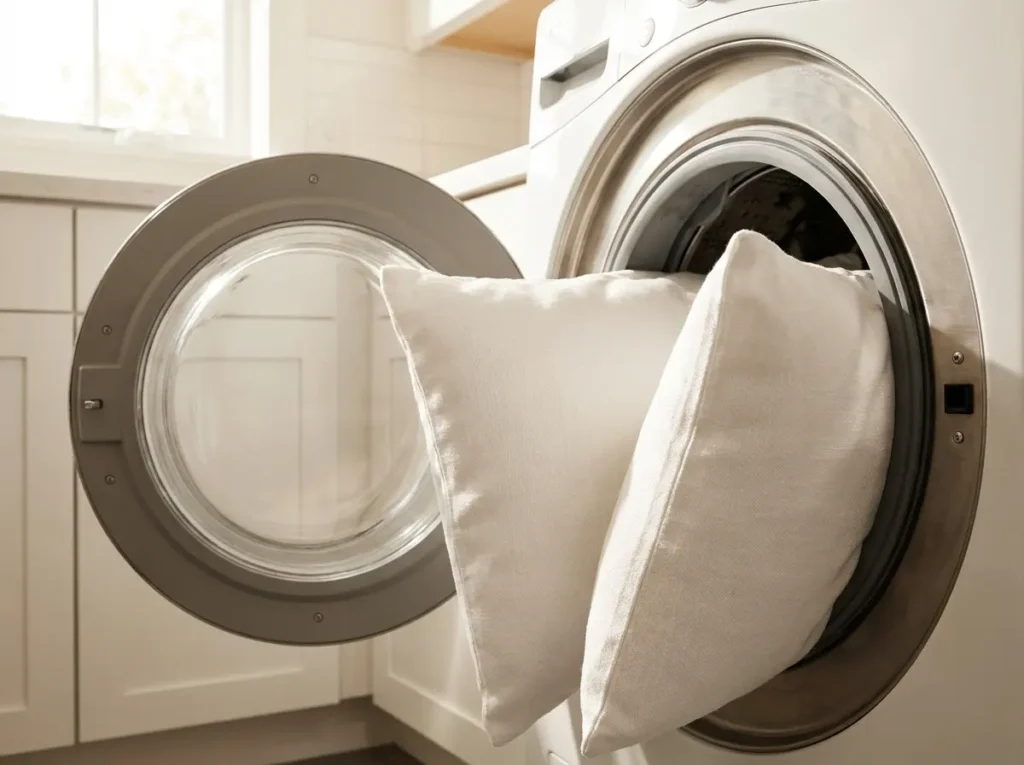
Machine washing is the most effective method for how to clean pillows made from polyester, down, feather, and most cotton fills. Before you start, do two things: check the care label and confirm your washer can handle the load.
Care label symbols to look for:
- Tub with water = machine washable
- Hand = hand wash only
- Circle with X = do not wash
- Crossed-out tub = do not machine wash
Top-loading machines with an agitator can be hard on pillows the agitator puts mechanical stress on the fill and can cause clumping. A front-loading machine or a top-loader without an agitator is better. If you only have an agitator machine, reduce the spin speed.
How to Clean Pillows in a Washing Machine — Step-by-Step
- Check the care label. Confirm the pillow is machine washable. If the label is missing or unclear, hand wash instead.
- Remove the pillowcase and pillow protector. Wash them separately.
- Load two pillows at once. This balances the drum and prevents the machine from vibrating excessively. If you only have one pillow, add two clean towels to balance the load.
- Add a small amount of mild detergent. Use less than you would for clothing too much detergent leaves residue in the fill that is difficult to rinse out completely. A fragrance-free, dye-free detergent works well.
- Select the correct cycle. Use a gentle, delicate, or bulky cycle. Warm water works for most polyester fills. Use cool or cold water for down and feather pillows unless the care label says otherwise.
- Run an extra rinse cycle. This removes any remaining detergent from inside the fill. Residual detergent causes odor and can irritate skin.
- Spin on a low speed. High spin compresses the fill. Remove the pillows promptly after the cycle ends.
- Dry completely. See the drying section below for full instructions this step is critical.
Can You Wash All Pillows in a Washing Machine?
No. Machine washing suits polyester fiberfill, down, feather, and most cotton-filled pillows. It does not suit memory foam, latex, or most buckwheat pillows submerging these materials in water damages their structure. Many decorative pillows with beading, embroidery, or delicate fabric covers should also not go in the washing machine. When in doubt, hand wash or spot-clean only.
How to Clean Pillows Without a Washing Machine
Not everyone has access to a washing machine, and some pillow types simply cannot go in one. Here are the main alternatives for how to clean pillows without a washing machine.
How to Clean Pillows in a Bathtub
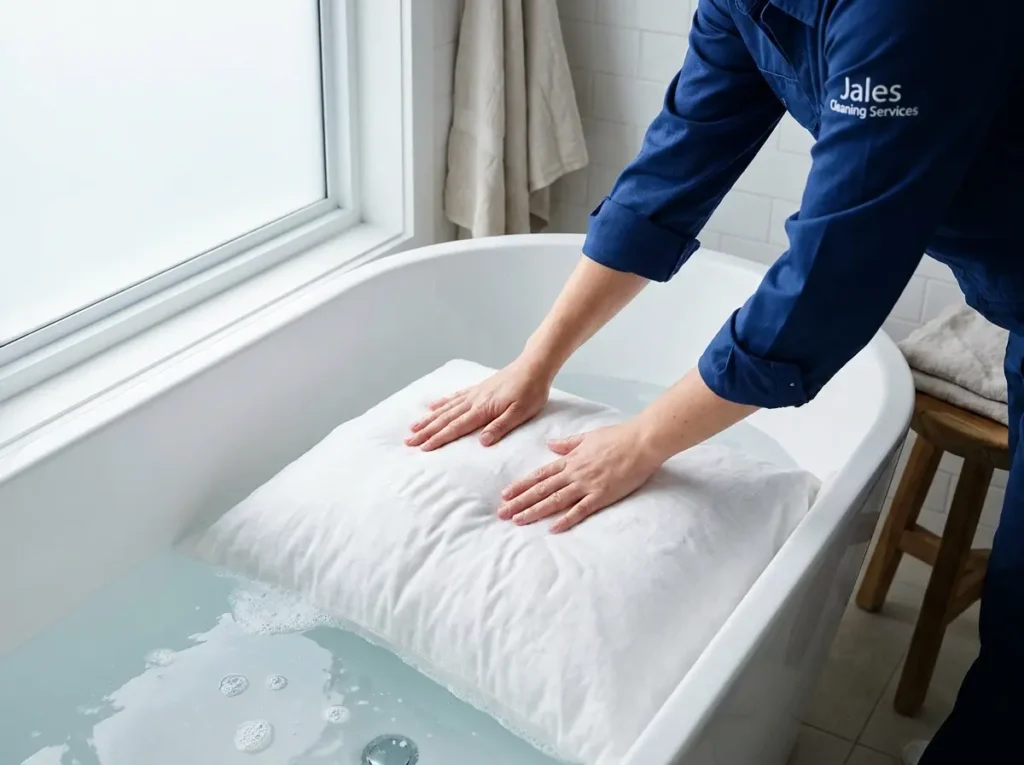
The bathtub method works well for large, machine-washable pillows that do not fit comfortably in a residential washer particularly body pillows, large decorative cushions, or oversized euro pillows.
- Fill the bathtub with lukewarm water and add a small amount of mild liquid detergent. Swirl to combine.
- Submerge the pillow and press it down gently to saturate the fill.
- Work the soapy water through the pillow by squeezing and pressing do not wring or twist, as this damages the fill structure.
- Drain the tub and refill with clean water.
- Press the pillow to push soapy water out and draw clean water in. Repeat until the water runs clear and you no longer see suds.
- Press out as much water as possible do not wring. Roll the pillow in a dry towel and press firmly to remove more moisture.
- Air dry flat or tumble dry on low heat, depending on the fill material.
This method is not suitable for memory foam or latex pillows soaking damages their internal structure.
How to Wash Pillows by Hand
For smaller pillows or delicate fills, hand washing in a sink is a gentler option than the bathtub method.
- Fill a large sink or basin with lukewarm water and a small amount of gentle detergent.
- Submerge the pillow and squeeze gently to work the soapy water through the fill.
- Do not scrub hard work slowly and evenly.
- Drain and rinse under running water, squeezing gently until the water runs completely clear.
- Press between clean towels to remove excess water.
- Air dry completely before returning to use this may take 12–24 hours depending on the fill thickness.
How to Clean Pillows Without Washing
Some pillows memory foam, latex, certain decorative types should not be fully submerged. “Cleaning” in this context means surface refreshing rather than a full wash. These methods remove surface soil and odors but do not replace a proper wash for machine-washable materials.
Surface spot-cleaning:
- Mix a small amount of mild dish soap with warm water.
- Dampen a clean cloth do not soak it.
- Blot soiled areas gently. Do not rub, as this pushes soil deeper into the fabric.
- Wipe with a second cloth dampened with plain water to remove soap residue.
- Allow to air dry completely before using.
Baking soda refresh:
- Sprinkle a light, even layer of baking soda over the pillow surface.
- Leave for 30–60 minutes to absorb moisture and odors.
- Vacuum off thoroughly with an upholstery attachment.
- Flip and repeat on the other side.
This freshens the surface and reduces mild odors. It does not sanitize or deeply clean the pillow — clarify this point with anyone who asks.
How to Clean Different Types of Pillows
Different fill materials and cover fabrics require different approaches. This section covers the most common pillow types in detail.
Pillow Cleaning Methods by Material
| Pillow Type | Suitable Cleaning Method | Machine Washable? | Key Precautions |
|---|---|---|---|
| Polyester fiberfill | Machine wash, bathtub, or hand wash | Yes | Use gentle cycle; extra rinse to remove detergent residue |
| Down and feather | Machine wash on delicate; dry with dryer balls | Yes (usually) | Low heat only; must be completely dry to prevent mildew inside |
| Memory foam | Spot clean only; baking soda surface refresh | No | Never submerge; never use a dryer; heat damages foam |
| Latex | Spot clean only; air dry | No | Water can degrade latex; no heat; no machine |
| Bamboo | Machine wash gentle or hand wash | Often yes | Check label; cool water; air dry or low heat |
| Buckwheat | Remove fill; wash cover only | Cover only | Never wash buckwheat hulls; replace hulls if soiled |
| Down alternative (polyester) | Machine wash | Yes | Same as polyester; check cover fabric |
| Body pillow | Machine wash (large capacity) or bathtub | Depends on fill | May require commercial washer; dry thoroughly |
| Decorative / throw | Spot clean; some covers machine washable | Cover only (usually) | Check fabric; remove cover if possible before washing |
| Outdoor / patio | Spot clean; machine wash cover if removable | Cover often yes | Must dry completely before storage to prevent mold |
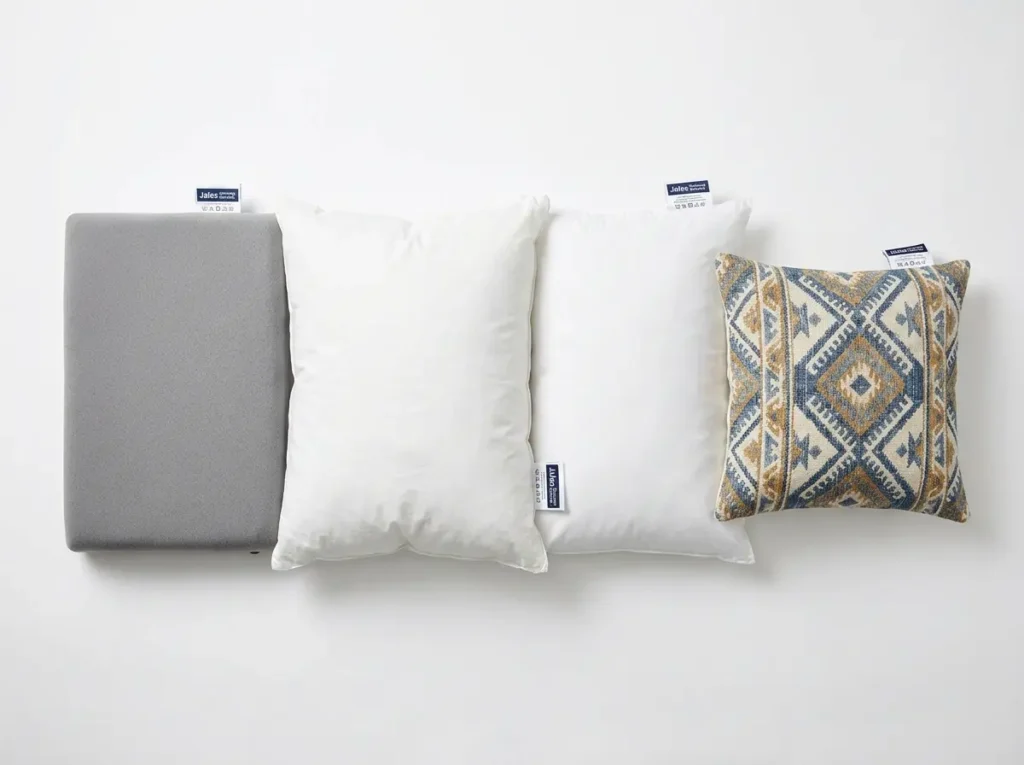
How to Clean Memory Foam Pillows
Memory foam should never go in the washing machine or the dryer. Water saturates the foam structure and the material takes a very long time to dry inside — often longer than is practical. Heat from a dryer can melt or deform the foam permanently.
Correct method:
- Remove the cover or pillowcase and wash it separately per the label.
- Mix a small amount of mild dish soap with warm water in a spray bottle or bowl.
- Lightly dampen a clean cloth — do not saturate it.
- Blot any soiled spots gently. Work from the outside of the stain inward.
- Wipe with a second clean cloth moistened with plain water to remove soap.
- Press a dry towel against the surface to absorb remaining moisture.
- Allow to air dry completely in a well-ventilated area. Do not use the pillow until it is fully dry inside and out this can take 24 hours or more.
For general freshening without visible stains, sprinkle baking soda over the surface, leave for 60 minutes, then vacuum off.
How to Clean Down and Feather Pillows
Learning how to clean pillows made with down or feathers requires a bit of extra care, but most are machine washable. The critical factor is drying down clusters must be fully dry or they develop mildew and a persistent musty odor.
- Check the care label. Most down pillows allow machine washing.
- Use a small amount of a gentle, low-suds detergent. Too much soap coats the down clusters and reduces loft.
- Wash on a delicate or gentle cycle in warm water. Wash two pillows together for balance.
- Run a second rinse cycle.
- Tumble dry on low heat with two or three clean tennis balls or dryer balls. The balls break up clumps and restore fluffiness.
- Run multiple drying cycles if needed. Remove the pillows periodically and squeeze the corners — if you feel any cool or damp spots inside, continue drying.
- The pillow is fully dry when it feels light, fluffy, and uniform throughout. This can take 2–3 full dryer cycles.
How to Clean Latex Pillows
Latex pillows require the gentlest approach. Even mild machine agitation can damage the latex structure. Use only spot cleaning and hand blotting:
- Remove the cover and wash it separately.
- Mix a small amount of gentle soap with cool water.
- Dampen a cloth do not soak it and blot any soiled areas.
- Rinse by blotting with a clean damp cloth.
- Press gently with a dry towel to remove moisture.
- Air dry flat, away from direct sunlight (UV degrades latex over time).
Do not use hot water, hydrogen peroxide, or bleach on latex.
How to Clean Bamboo Pillows
Bamboo pillow covers are typically machine washable; the fill (usually shredded memory foam or a bamboo fiber blend) varies. The safest approach:
- Check the care label on both the cover and the insert separately.
- If the cover is removable and machine washable, wash it on a gentle cycle in cold water.
- For the insert: if it is shredded foam, follow the memory foam guidance above (spot clean only). If it is a bamboo fiber fill, check the label some allow gentle machine washing.
- Air dry the cover and insert separately. Low heat in the dryer is acceptable for most bamboo covers, but confirm with the label.
How to Clean Body Pillows
Body pillows present a size challenge many do not fit comfortably in a standard residential washing machine. Options:
- Large-capacity home washer: If your machine fits it without compressing the fill too tightly, follow the standard machine wash steps above.
- Bathtub method: Works well for body pillows. Follow the bathtub instructions in the previous section.
- Commercial laundromat machine: The large-capacity front-loaders at a laundromat handle body pillows well and provide better rinsing than small home machines.
Drying a body pillow completely is essential the larger mass means more time is needed. Expect 3–4 dryer cycles on low heat, or allow 24+ hours of air drying.
How to Clean Decorative and Throw Pillows
Decorative pillows including throw pillows, accent pillows, couch pillows, and sofa cushions vary enormously in construction. Some have removable zip covers; others are sewn closed. Some covers are machine washable; others are dry-clean only.
General approach:
- Check for a care label on the cover fabric. Velvet, silk, linen, embroidered, and beaded covers typically require dry cleaning or spot cleaning only.
- If the cover is removable and machine washable, unzip and wash the cover separately on a gentle cycle.
- The inner fill (usually polyester or down alternative) can often be machine washed or spot cleaned while the cover is off.
- For pillows without removable covers, spot clean the surface using a mild soap solution and a clean cloth. Blot, do not rub.
- For couch pillows with stuffing that cannot be removed, the bathtub method works if the cover fabric allows it test a hidden area first.
Throw pillows without a zipper can be freshened with the baking soda surface method between deeper cleans.
How to Clean Outdoor Pillows
Outdoor pillows are designed for weather exposure, but they still accumulate mildew, pollen, bird droppings, and general grime. Knowing how to clean pillows meant for outdoor use is straightforward:
Most outdoor pillows:
- Use covers made from solution-dyed acrylic (Sunbrella is a common brand), polyester, or treated canvas.
- Many covers are removable and machine washable.
Method for outdoor pillow covers:
- Brush off loose dirt and debris.
- If machine washable, wash in cold water on a gentle cycle with a mild detergent. Do not use bleach unless the label specifically permits it.
- Air dry rather than tumble dry heat can shrink or damage outdoor fabric coatings.
For mildew or stubborn stains on outdoor pillows:
- Mix one cup of white vinegar with one cup of water in a spray bottle. Add a small amount of mild dish soap.
- Spray the solution on the stained area and let it sit for 15–20 minutes.
- Scrub gently with a soft brush.
- Rinse thoroughly with clean water from a hose or sink.
- Allow to air dry completely do not store outdoor pillows while damp, as this causes mildew inside the fill.
Important: Never mix vinegar with chlorine bleach. The combination produces chlorine gas, which is a serious inhalation hazard. If you use bleach on outdoor cushions, rinse completely and ensure the surface is dry before using any vinegar-based solution. If you are unsure about chemical compatibility, contact Poison Control at poison.org before combining any cleaning products.
How to Remove Yellow Stains and Odors from Pillows
Yellow staining on pillows is caused by sweat, body oils, and saliva that penetrate through pillowcases over time. It is one of the most common questions people have when figuring out how to clean pillows that have been in use for a while.
Pillow Stain and Odor Treatment
| Problem | Suitable Approach | Precautions |
|---|---|---|
| Yellow sweat stains | Pre-treat with oxygen-based bleach (OxiClean) soak or hydrogen peroxide + mild dish soap; then machine wash | Do not use chlorine bleach on down or feather pillows |
| Fresh stains (food, drink) | Blot immediately with clean damp cloth; mild soap solution spot clean | Do not rub blot only |
| Mildew odor | Full machine wash with hot water (if label allows) + oxygen bleach; dry thoroughly | Mildew smell returns if pillow is not dried completely |
| General odors | Baking soda surface refresh; air in sunlight | Baking soda freshens surface only does not replace washing |
| Old, set-in stains | OxiClean soak 2–6 hours before washing; may require multiple washes | Very old stains may not fully remove |
| Mold (visible) | Discard the pillow mold inside the fill cannot be safely removed | Do not attempt to wash a pillow with visible mold growth |
How to Clean Yellow Pillows
Yellow stains usually come from sweat and body oils that have built up over months. For machine-washable pillows:
- Pre-treat the stains before washing. Apply a paste of baking soda and water directly to the yellow areas, or soak the pillow in a tub of warm water with one cup of oxygen-based bleach (OxiClean) dissolved in it. Allow to soak for 2–6 hours.
- Machine wash on a warm or hot cycle (check the label most polyester and down alternative pillows tolerate warm water).
- Add a quarter cup of oxygen bleach powder to the wash cycle.
- Run an extra rinse cycle.
- Dry completely.
For white pillows with heavy yellowing, adding half a cup of distilled white vinegar to the rinse cycle helps break down residual oils. Do not add vinegar and bleach in the same cycle.
H3: How to Clean Pillows with Baking Soda
Baking soda is useful for absorbing surface odors and light moisture, but it does not wash a pillow. It is best used between washes or for materials that cannot be submerged (memory foam, latex).
Dry surface method:
- Lay the pillow flat on a clean surface.
- Sprinkle baking soda evenly over one side aim for a thin, even layer, not a thick pile.
- Leave for 30–60 minutes.
- Vacuum off with an upholstery brush attachment. Remove all the baking soda before turning the pillow over.
- Repeat on the other side.
Wet pre-treatment for stains: Make a paste of baking soda and water (3:1 ratio). Apply to the stain and allow to sit for 30 minutes. Blot off with a damp cloth before washing.
How to Clean Pillows with Vinegar
White vinegar is useful for cutting through odors, breaking down mineral deposits, and as a mild fabric freshener. It is not a disinfectant and does not remove heavy stains on its own.
In the wash: Add half a cup of distilled white vinegar to the rinse cycle compartment of your washing machine when washing machine-washable pillows. This helps remove detergent residue and freshens the fabric.
Spray method for surface odors: Mix equal parts white vinegar and water in a spray bottle. Lightly mist the pillow surface. Allow to air dry completely the vinegar smell dissipates as it dries.
Critical safety warning: Never mix white vinegar with chlorine bleach in any amount, in any container, in any sequence. The combination produces chlorine gas. This applies to any cleaning task, not just pillow cleaning. If you are unsure whether a product contains bleach, read the label carefully before combining it with anything acidic.
How to Dry Pillows Properly After Cleaning
Drying is the step most people get wrong when figuring out how to clean pillows. A pillow that is damp on the inside will develop mildew within hours and once mildew grows inside the fill, the pillow typically cannot be fully rescued.
Why complete drying matters: Pillow fills especially down, feather, and thick polyester retain moisture in their center even when the outer surface feels dry. If you put that pillow back in its case and use it, the remaining moisture breeds mildew and creates the musty smell that makes people think they cleaned the pillow wrong.
Dryer method (for machine-washable fills):
- Use low heat. High heat damages most fill materials and can cause polyester to melt into clumps.
- Add two or three clean tennis balls or dryer balls. These beat the fill during tumbling and prevent clumping especially important for down pillows.
- Run the dryer for a full cycle, then remove the pillow and squeeze the corners and center. If you feel any cool, damp, or heavy areas, run another cycle.
- Most pillows require 2–3 full dryer cycles to reach complete dryness inside.
Air drying:
- Lay flat on a clean, dry surface in a well-ventilated room.
- If outdoor conditions allow (dry, breezy, not humid), air drying outside speeds the process.
- Flip the pillow every few hours.
- Allow at least 12–24 hours for a full sleep pillow, longer for body pillows or thick fills.
- Do not use the pillow until it is completely dry inside and out.
What to do if a pillow remains damp: If a pillow still feels damp after extended drying particularly down pillows with dense clusters return it to the dryer with fresh tennis balls. If the damp smell persists even after the pillow seems dry, it has likely begun to develop mildew. At that point, consider whether replacement is the better option.
Common Pillow Cleaning Mistakes to Avoid
Even with the best intentions, it is easy to damage pillows or end up with a less-than-clean result. These are the most frequent mistakes when people attempt to clean their pillows at home:
- Ignoring the care label. This is the single most common error. Memory foam put through a washing machine, down pillows dried on high heat, silk-covered decorative pillows washed in hot water — all of these mistakes start with skipping the label.
- Using too much detergent. Extra detergent does not mean extra clean. Excess detergent becomes trapped in the fill and is difficult to fully rinse out. It leaves residue that makes the fill stiff, causes skin irritation, and creates a stale smell over time. Use about half the amount you would use for a comparable load of clothing.
- Washing only one pillow. A single pillow in a washing machine creates an unbalanced load. The machine spins unevenly, putting mechanical stress on the drum and on the pillow itself. Always wash two pillows together, or balance the load with clean towels.
- Drying on high heat. High heat melts polyester fill into clumps, damages foam, and can degrade the fabric of the cover. Use low heat for all pillow drying, or air dry.
- Using bleach without checking compatibility. Chlorine bleach can damage down and feather fills, some synthetic materials, and many colored or patterned cover fabrics. If you use bleach, confirm the care label permits it and use the smallest effective amount.
- Putting a pillow away before it is fully dry. This is what causes the musty smell people often notice when they pull out a pillow they cleaned weeks ago. The fill felt dry on the outside, but moisture remained in the center. Always do the squeeze test before declaring a pillow dry.
- Treating all pillow materials the same way. Knowing how to clean pillows correctly starts with recognizing that memory foam, latex, down, polyester, and decorative fabric each have different requirements. What works perfectly for a polyester fill can ruin a memory foam pillow.
Daily and Weekly Pillow Maintenance Checklist
Knowing how to clean pillows thoroughly is important, but regular maintenance between washes keeps them fresher for longer and reduces how often a full wash is needed.
Daily:
- Use a pillowcase always. A pillowcase blocks the majority of sweat and body oil transfer.
- Fluff the pillow when you make the bed to restore shape and air it out briefly.
Weekly:
- Wash pillowcases.
- If you use a pillow protector under the pillowcase, check it for staining.
Monthly:
- Air the pillow outside (or near an open window) for a few hours.
- Check for odors or staining address spot stains before they set.
- Wash pillow protectors.
Every 3–6 months:
- Full wash per the care label.
- Inspect the fill squeeze the pillow to check for clumps, tears, or compressed areas that do not recover.
Before and after illness:
- Wash pillowcases immediately.
- Wash the pillow itself as soon as the person has recovered.
When Should You Replace a Pillow Instead of Cleaning It?
Knowing when to replace a pillow is just as important as knowing how to clean pillows correctly. Some pillows reach a point where cleaning no longer helps.
Signs a pillow should be replaced rather than cleaned:
- Visible mold or mildew growth inside the fill. Mold cannot be fully removed from inside a pillow’s fill. Discard and replace.
- Persistent odor after washing. If a pillow continues to smell after a proper wash and complete drying, the fill has absorbed odors beyond what surface cleaning can address.
- Permanently lumpy or uneven fill. A pillow that has lost its shape and no longer recovers after fluffing is no longer providing proper support.
- The fold test failure. Fold a standard pillow in half and release it. A pillow in good condition springs back to flat. A worn-out pillow stays folded or takes a long time to recover.
- Torn or damaged cover. A torn cover exposes the fill to direct contact this accelerates soil absorption and makes the pillow harder to clean effectively.
There is no universal lifespan rule that applies to all pillow types. Down pillows maintained correctly can last significantly longer than a polyester fill pillow. Memory foam and latex pillows last several years with proper care. When a pillow no longer passes the fold test, smells despite cleaning, or has visible damage, replacement is the right call.
San Jose homeowners who include regular bedroom deep cleaning as part of their home maintenance often find this is the right time to assess pillow condition and if a full bedroom refresh is needed, Jales Cleaning Services provides deep cleaning and regular cleaning services across the Bay Area.
Frequently Asked Questions About How to Clean Pillows
What is the best way to clean pillows?
The best way to clean pillows depends on the fill material. For polyester, down, and feather pillows, machine washing on a gentle cycle with mild detergent followed by complete low-heat drying is the most effective method. Memory foam and latex pillows should be spot-cleaned only. Always check the care label before choosing a method.
Is it safe to wash pillows in a washing machine?
Yes, for most standard sleep pillows with polyester, down, or feather fills. It is not safe for memory foam, latex, or most buckwheat pillows. Front-loading machines or top-loaders without an agitator are gentler than agitator machines. Always confirm with the care label.
How often should you wash your pillows?
Most sleep pillows benefit from washing every three to six months. Pillowcases should be washed every one to two weeks. Pillow protectors should be washed every one to two months. Wash more frequently after illness or if you sweat heavily during sleep.
How do you clean pillows without a washing machine?
Use the bathtub method for large machine-washable pillows: fill the tub with lukewarm soapy water, submerge and gently squeeze the pillow, rinse until water runs clear, press out excess water, and air dry completely. For non-washable pillows, spot-clean with a mild soap solution and blot dry.
How do you clean pillows in a bathtub?
Fill the tub with lukewarm water and a small amount of mild liquid detergent. Submerge the pillow, squeeze gently to work the soapy water through, drain and refill with clean water, and repeat until the water runs clear. Press out excess water with towels and air dry or tumble dry on low heat.
How do you wash pillows by hand?
Fill a sink or basin with lukewarm water and a small amount of gentle detergent. Submerge the pillow and squeeze gently to work the soap through. Rinse under running water while squeezing gently until no suds remain. Press between clean towels to remove moisture and air dry completely.
How do you clean pillows that cannot be washed?
For memory foam, latex, and other non-washable pillows, spot clean with a cloth dampened in a mild soap and water solution. Blot the soiled area do not rub. Rinse by blotting with a plain damp cloth. For general freshening, sprinkle baking soda over the surface, leave for 30–60 minutes, and vacuum off.
How do you clean yellow pillows?
Pre-treat yellow stains with an oxygen-based cleaner (like OxiClean) dissolved in warm water soak for two to six hours before washing. Machine wash on warm with a gentle detergent and add oxygen bleach to the drum. Run an extra rinse cycle and dry completely. For white pillows, adding white vinegar to the rinse cycle helps remove residual oils.
Can you clean pillows with baking soda?
Yes, as a surface freshener between washes. Sprinkle baking soda evenly over the pillow, leave for 30–60 minutes, and vacuum off. This reduces surface odors and absorbs light moisture. It does not replace washing and does not sanitize the pillow.
Can you clean pillows with vinegar?
White vinegar is useful as a rinse-cycle additive (half a cup in the rinse compartment) for machine-washable pillows it helps remove detergent residue and freshens the fabric. It can also be sprayed lightly on pillow surfaces as a mild deodorizer. It is not a disinfectant. Never mix vinegar with chlorine bleach.
How long does it take to dry pillows?
In a dryer on low heat, most standard pillows take two to three full dryer cycles (60–90 minutes each) to dry completely through the fill. Air drying takes 12–24 hours for a standard sleep pillow, and longer for body pillows or thick fills. Always check for internal moisture before returning a pillow to use.
Can you put memory foam pillows in the washing machine?
No. Machine washing saturates the foam structure and the agitation can tear or permanently deform it. Memory foam must be spot-cleaned only, using a lightly dampened cloth and mild soap. Never put memory foam in the dryer either heat damages the foam permanently.
How do you clean down and feather pillows?
Most down and feather pillows are machine washable on a gentle or delicate cycle using a small amount of gentle, low-suds detergent. Wash two at a time for balance. The critical step is drying tumble dry on low heat with clean tennis balls or dryer balls for multiple full cycles until completely dry inside. Damp down develops mildew quickly.
Should you throw away old pillows?
Not automatically, but there are clear indicators. If a pillow fails the fold test (fold in half it should spring back), has visible mold, retains a persistent odor after washing, or has permanently clumped or compressed fill, replace it. A well-maintained down pillow can last years; a polyester fill pillow typically lasts one to three years with regular washing.
How do you keep pillows clean between washes?
Use a pillowcase always. Add a pillow protector under the pillowcase these zip-on covers block the majority of sweat and oil from reaching the pillow itself and can be washed frequently. Air the pillow out monthly by laying it near a window or outdoors on a dry day. Address visible stains promptly before they set.
Final Thoughts
Knowing how to clean pillows correctly takes a few minutes to learn but pays off in fresher sleep and longer-lasting bedding. The key principles are always the same: check the care label before you do anything else, choose the right method for the specific fill material, use less detergent than you think you need, and dry the pillow completely before returning it to use. Whether you are machine washing a down pillow, spot cleaning memory foam, or tackling yellow stains on an old synthetic pillow, the right approach is straightforward once you know what you are working with.
If you are ready for a full bedroom refresh fresh pillows, clean mattress, spotless surfaces a deep cleaning service from Jales Cleaning Services covers everything your regular routine does not. We serve San Jose, Fremont, Palo Alto, Mountain View, Cupertino, Milpitas, Campbell, Menlo Park, and the wider Bay Area.