
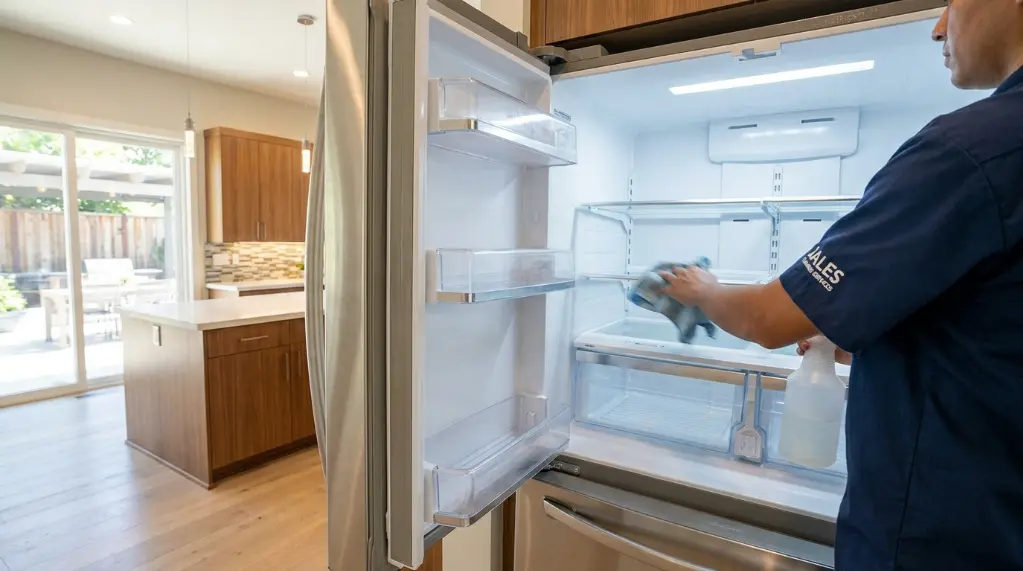
A quick wipe-down isn’t the same as a real deep clean refrigerator session, and most of us can tell the difference the moment we pull out the crisper drawer and find something questionable underneath it. Between spills that seep into shelf tracks, coils collecting dust behind the unit, and door seals that trap grime in every groove, a refrigerator needs more attention than a weekly sponge-down provides.
This guide from Jales Cleaning Services, serving San Jose and the greater Bay Area, walks you through exactly how to deep clean refrigerator interiors, coils, dispensers, and seals safely, what it costs if you’d rather hire it out, and how often the job actually needs doing.
Quick answer: A full deep clean refrigerator routine involves emptying the fridge, removing and washing shelves and drawers, wiping interior walls with a baking soda solution, cleaning door seals and dispensers, vacuuming the condenser coils, and wiping down the exterior. Most households should deep clean every 3 to 4 months, with a quick wipe-down weekly in between.
What Counts as a Deep Clean (vs Regular Cleaning)
Regular refrigerator cleaning is what most of us do weekly: wiping visible spills, tossing expired items, and giving shelves a quick swipe. A true deep clean refrigerator session goes several steps further and typically includes:
- Removing every shelf, drawer, and bin for a full wash
- Wiping down interior walls, ceiling, and door with a disinfecting solution
- Cleaning door seals and gaskets where mold and grime commonly hide
- Vacuuming or brushing dust off the condenser coils
- Cleaning the water dispenser and ice maker components
- Wiping the exterior, including the top of the unit, which collects surprising amounts of dust
Regular cleaning keeps things tidy day to day. A deep clean refrigerator session is what actually addresses odor sources, bacteria buildup, and the parts of the unit most people never think to touch.
Essential Supplies for a Deep Clean Refrigerator Session
Before you start, gather these supplies for a thorough, non-toxic clean.
- Baking soda
- White vinegar
- Mild dish soap
- Warm water
- Microfiber cloths and a soft sponge
- A soft-bristled brush or old toothbrush for tight corners and gaskets
- A vacuum with a brush attachment for the coils
- A cooler or box to hold food temporarily
- Rubber gloves
Skip bleach and ammonia-based cleaners for the interior, since food-contact surfaces should stick to non-toxic solutions that won’t leave chemical residue behind on items you’re about to eat.
How to Deep Clean Refrigerator: Step by Step
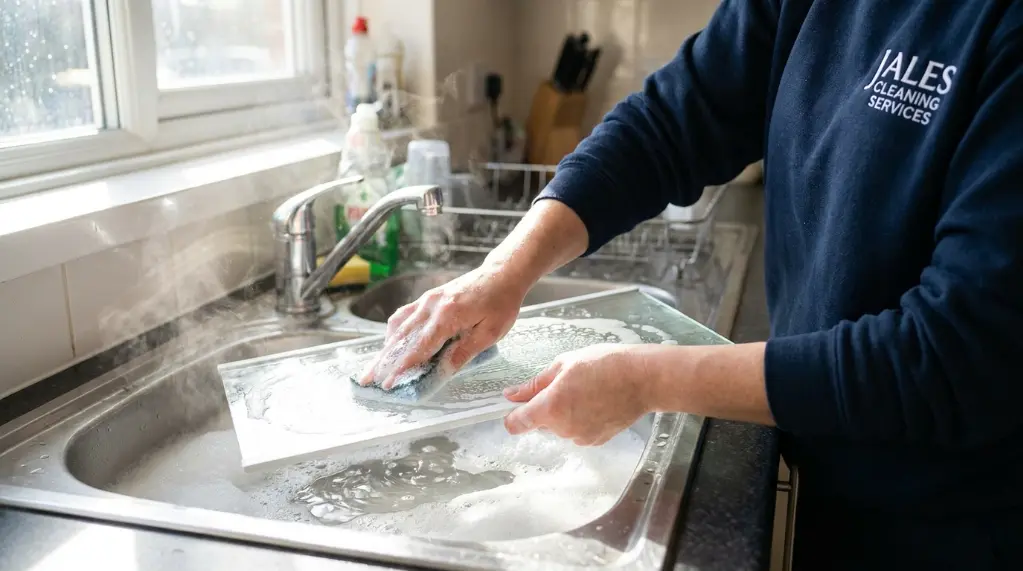
Here’s exactly how to deep clean refrigerator interiors from start to finish.
Step 1: Empty the Fridge Completely
Move all food into a cooler or box, checking expiration dates as you go and tossing anything expired or questionable. This is also the best time to wipe down individual containers before they go back in.
Step 2: Remove Shelves and Drawers
Take out every removable shelf, drawer, and bin. Let glass shelves come to room temperature before washing with warm water to avoid cracking from sudden temperature change.
Step 3: Wash Removable Parts
Wash shelves, drawers, and bins in warm, soapy water, or in the sink if they fit, then dry thoroughly before setting aside.
Step 4: Wipe Down the Interior
Mix 2 tablespoons of baking soda with 1 quart of warm water and wipe down all interior walls, the ceiling, and the door, paying close attention to corners where spills tend to collect.
Step 5: Clean the Door Seals
Use a soft brush or old toothbrush with the baking soda solution to clean along the door gasket, where crumbs and grime frequently build up unnoticed.
Step 6: Reassemble and Restock
Once everything is dry, put shelves and drawers back in place, then return food to the fridge, wiping down any sticky containers before they go back in.
How to Deep Clean Refrigerator Coils and Condenser
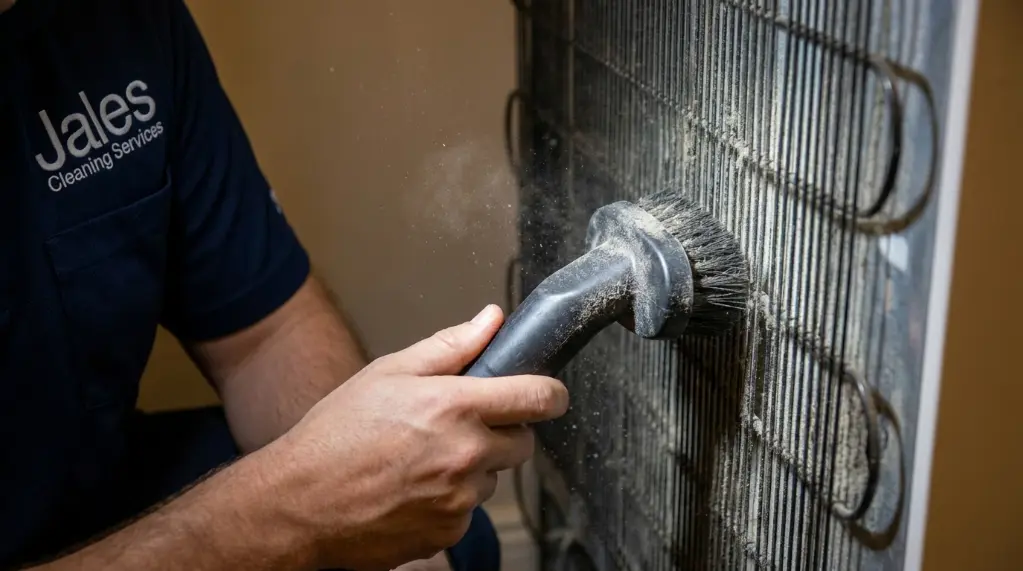
Cleaning refrigerator coils and the condenser is one of the most skipped steps in a deep clean refrigerator routine, yet it directly affects how efficiently the appliance runs.
- Unplug the refrigerator before starting, both for safety and to avoid the compressor cycling while you work
- Locate the coils, typically found either behind the unit or along the bottom front, depending on the model
- Use a vacuum with a brush attachment or a specialized coil brush to remove dust and pet hair buildup
- Work gently to avoid bending the coil fins, which can affect cooling efficiency
- Clean the coils every 6 months, or every 3 months in homes with pets, since fur builds up dust faster
Dusty coils make a refrigerator work harder to maintain temperature, which can quietly increase your energy bill over time, a point echoed in ENERGY STAR appliance maintenance tips, which recommend regular coil cleaning as one of the simplest ways to keep a refrigerator running efficiently.
How to Deep Clean Refrigerator Water Dispenser and Ice Maker
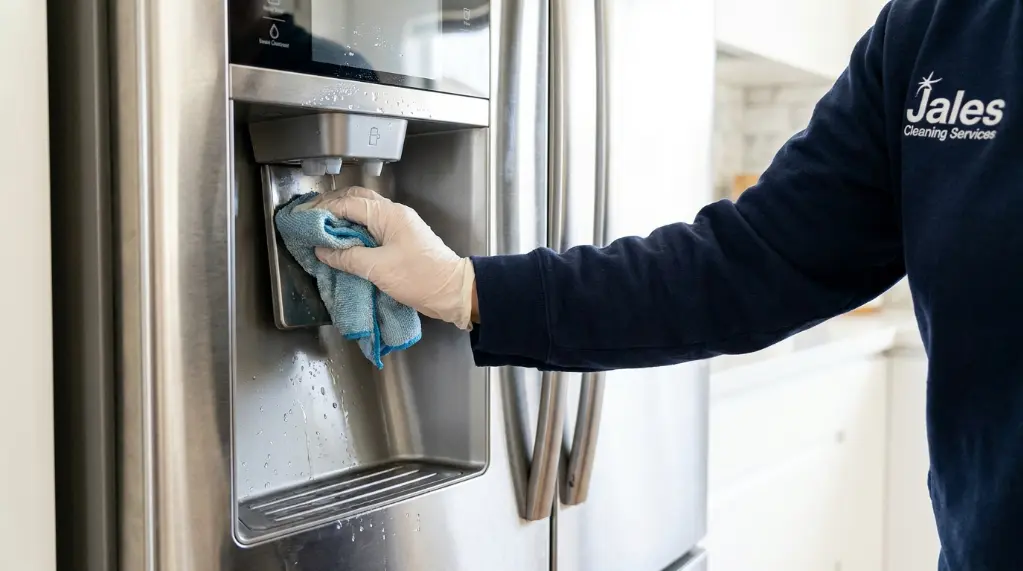
The water dispenser and ice maker are two of the most overlooked areas in a deep clean refrigerator session, despite being where drinking water and ice directly pass through.
For the water dispenser:
- Wipe the dispenser tray and nozzle area with a vinegar and water solution to remove mineral buildup and mold
- Run a cup of water through and discard it after cleaning to flush the line
For the ice maker:
- Remove the ice bin and wash it with warm, soapy water, then dry completely before reinserting
- Discard the first batch or two of ice made after cleaning, since it may carry cleaning residue
- Check the manufacturer’s manual before deep cleaning built-in ice maker components, since some models, like certain Samsung and LG units, have specific cleaning cycles built in
How Often Should You Deep Clean a Refrigerator
Most households should aim to deep clean refrigerator interiors every 3 to 4 months, with a few adjustments depending on household size and habits.
- Households with pets or frequent cooking: every 2 to 3 months, since spills and pet hair accumulate faster
- Smaller households with lighter use: every 4 to 6 months may be sufficient
- After illness in the household: a deep clean sooner than scheduled is a good idea to reduce lingering bacteria
- Seasonally: many households find it easiest to tie deep cleaning to a seasonal schedule, such as before summer and before the winter holidays
Between deep cleans, a quick weekly wipe-down of visible spills keeps things manageable and prevents small messes from becoming much bigger cleaning projects.
What Should You Not Clean a Fridge With
A commonly searched question is what you should not clean a fridge with, and for good reason, since several popular household products aren’t actually fridge-safe.
- Bleach: Can leave harmful residue on food-contact surfaces and produces strong fumes in an enclosed space
- Ammonia-based cleaners: Similarly risky for food-contact surfaces and can react poorly if mixed with other cleaning products
- Abrasive scouring pads: Scratch plastic shelving and interior walls, creating grooves where bacteria and grime collect more easily
- Undiluted vinegar on rubber seals: Straight vinegar can dry out and crack rubber door gaskets over time; always dilute it with water
Is Dawn dish soap safe to use? Yes. Diluted Dawn dish soap and warm water is one of the safest, most effective combinations for cleaning refrigerator interiors, shelves, and drawers. FDA food-contact surface guidance.
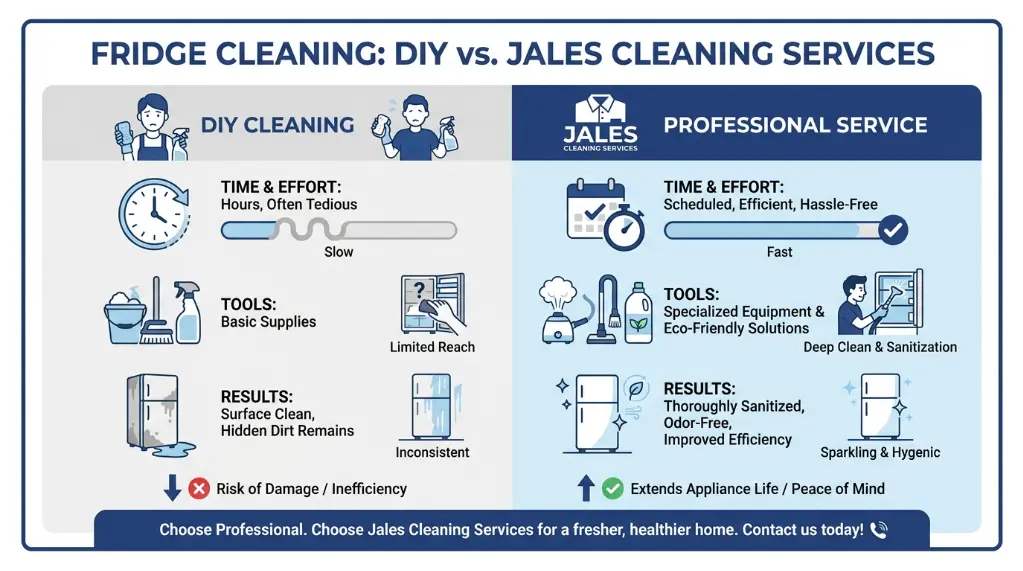
Deep Clean Refrigerator Cost: DIY vs Professional
| Approach | Best For | Cost | Time Required |
|---|---|---|---|
| DIY Deep Clean | Households comfortable doing the work themselves | Supplies only, under $10 | 1–2 hours |
| Professional Appliance Add-On | Combining fridge cleaning with a regular house cleaning visit | Varies, ask about add-on pricing | 30–45 minutes |
| Full Professional Deep Clean | Move-outs, post-illness cleaning, or first-time deep cleans | $0.39 per sq. ft. (Jales Cleaning Services deep cleaning rate) | Included as part of a full home deep clean |
| Commercial-Grade Refrigerator Service | Restaurants or businesses with commercial units | $60 per hour (Jales Cleaning Services commercial rate) | Based on unit size and condition |
A DIY deep clean refrigerator session is inexpensive and manageable for most households, but bundling it into a scheduled deep cleaning visit is often worth it if the rest of the kitchen needs attention anyway.
Common Mistakes When Deep Cleaning a Refrigerator
- Skipping the coils entirely, which reduces cooling efficiency and can raise energy costs over time
- Using bleach or ammonia on food-contact surfaces, which can leave harmful residue behind
- Washing cold glass shelves in hot water, which can cause them to crack from thermal shock
- Ignoring the door gasket, one of the most common hidden sources of mold and lingering odor
- Not flushing the water dispenser after cleaning, which leaves cleaning residue in the first few uses
What Counts as a Refrigerator Deep Clean ?
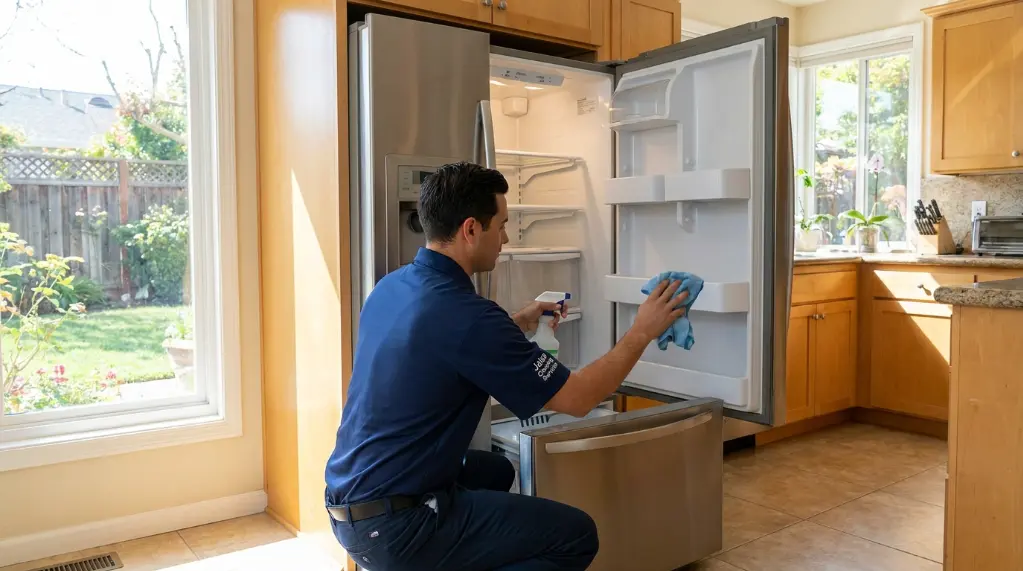
A refrigerator deep clean is a thorough cleaning process that goes beyond wiping visible surfaces, involving the removal and washing of all shelves and drawers, disinfecting interior walls and the door, cleaning the door gasket, dusting the condenser coils, and servicing the water dispenser and ice maker. It differs from routine cleaning, which addresses only visible spills and surface dust, and is generally recommended every 3 to 4 months to prevent bacteria buildup, odor, and reduced cooling efficiency.Refrigerator Cleaning Tips for San Jose & Bay Area Homes
San Jose’s warmer months, especially July through September, tend to increase how hard refrigerators work to maintain temperature, which makes coil cleaning even more valuable during this stretch for homes across San Jose, Santa Clara, Menlo Park, Sunnyvale, and Palo Alto.
Homeowners in San Jose’s older housing stock, particularly in neighborhoods like Willow Glen and parts of Almaden Valley, often have refrigerators positioned in tighter kitchen spaces with less airflow around the coils, which means dust and pet hair can build up there faster than in homes with more clearance around the unit.
If you’re scheduling a full house deep clean in San Jose, tying refrigerator cleaning to the same visit is an efficient way to knock out both without carving out separate time.
FAQs: Deep Clean Refrigerator
Final Thoughts
A proper deep clean refrigerator routine covers far more than what a quick weekly wipe-down handles, from the coils behind the unit to the door gasket most people never think to check. Doing it every 3 to 4 months keeps your fridge running efficiently, smelling fresh, and genuinely sanitary for the food inside it.
If a full refrigerator deep clean sounds like more than you want to tackle yourself, or your whole kitchen could use the same attention, Jales Cleaning Services offers refrigerator cleaning as part of our deep cleaning service for San Jose and Bay Area homeowners.