You wash your sheets every week, but the mattress underneath rarely gets the same attention, even though it collects sweat, dead skin, dust mites, and the occasional spill for years at a time. Learning the best ways to clean your mattress isn’t complicated, but it does require the right products, the right order of steps, and a little patience for drying time.
This guide from Jales Cleaning Services, serving San Jose and the greater Bay Area, walks you through exactly the best ways to clean your mattress, how to remove stubborn stains like blood, sweat, and urine, how to disinfect without damaging the material, and how often you actually need to do this.
Quick answer: The best ways to clean your mattress start with vacuuming the entire surface, spot treating stains with a mild solution suited to the stain type, sprinkling baking soda over the whole mattress to absorb odor, letting it sit for several hours, then vacuuming again. Always let the mattress fully air dry before putting sheets back on.
Table of Contents
Why Mattress Cleaning Matters
A mattress absorbs sweat, skin cells, and body oils every single night, which over time creates the perfect environment for dust mites and bacteria to build up. Beyond hygiene, an unclean mattress can also worsen allergies, contribute to lingering odor, and shorten the overall lifespan of the mattress itself, a connection backed by research on dust mites and allergens. This is exactly why knowing the best ways to clean your mattress matters as much as knowing how to clean any other part of your home.
Understanding the best ways to clean your mattress means treating it as regular home maintenance, similar to how you’d approach carpet or upholstery, rather than something you only think about after a visible stain appears.
What You Will Need
Before starting, gather these supplies for one of the best ways to clean your mattress thoroughly and effectively.
- A vacuum with an upholstery attachment
- Baking soda
- Mild dish soap, such as Dawn
- White vinegar
- Hydrogen peroxide, for specific stain types
- Cold water
- Clean white cloths or paper towels
- A spray bottle
- Enzyme cleaner, for urine or biological stains
Avoid soaking the mattress with any liquid, since excess moisture can seep into the padding and lead to mold or mildew, which is far harder to fix than a stain.
The Best Ways to Clean Your Mattress: Step by Step
Here are the best ways to clean your mattress, covering the full process from start to finish.
Step 1: Strip and Vacuum
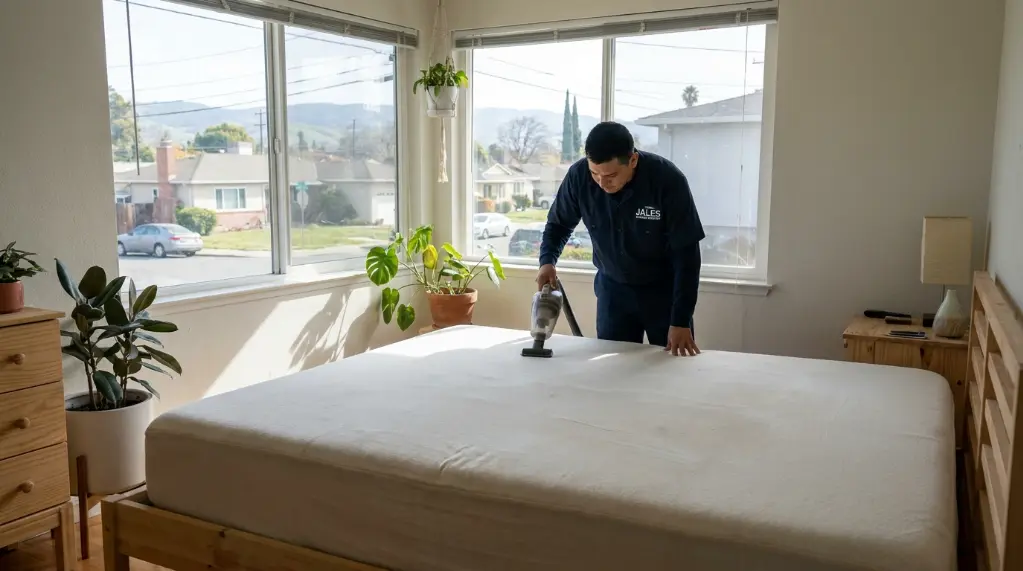
Remove all sheets, pillowcases, and the mattress protector, then vacuum the entire surface using an upholstery attachment, including the sides and seams where dust and debris collect.
Step 2: Spot Treat Any Stains
Identify visible stains and treat them individually with the appropriate solution for that stain type, covered in detail below, before moving on to the whole mattress treatment.
Step 3: Deodorize With Baking Soda
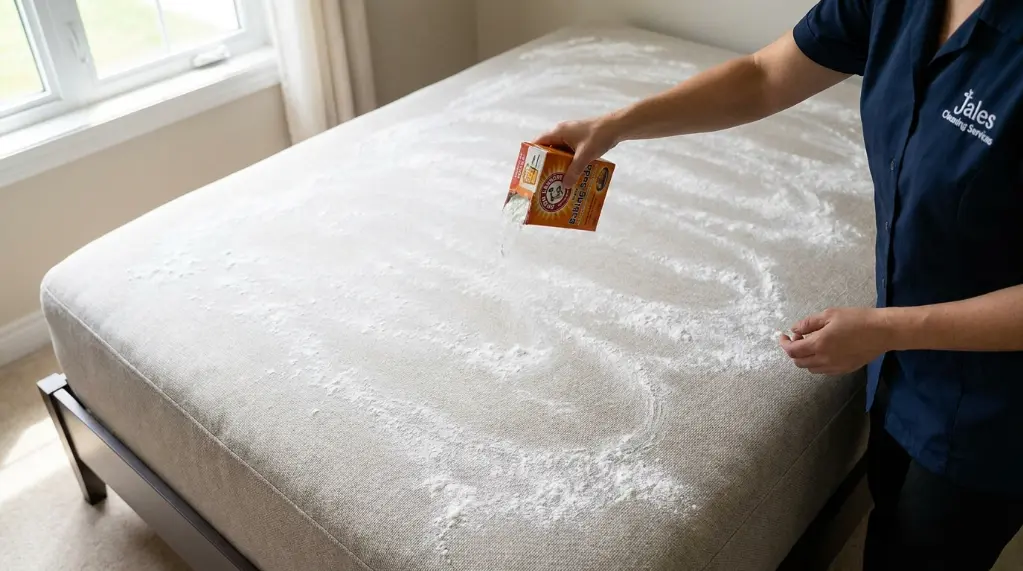
Sprinkle a generous, even layer of baking soda across the entire mattress surface. Baking soda absorbs moisture, odor, and helps loosen any remaining debris.
Step 4: Let It Sit
Allow the baking soda to sit for at least a few hours, ideally overnight if your schedule allows, so it has time to fully absorb odor and moisture from deep within the fabric.
Step 5: Vacuum Again
Vacuum the entire mattress a second time to remove all the baking soda, working slowly to make sure none is left behind in seams or tufted areas.
Step 6: Let the Mattress Air Out
Before putting sheets back on, let the mattress air out for a few hours in a well ventilated room, or near an open window if possible, to ensure it’s fully dry.
How to Get Yellow and Brown Stains Out of a Mattress
Yellow and brown stains are one of the most searched mattress problems, and they’re usually caused by a combination of sweat, body oils, and oxidation over time rather than a single spill.
- Mix equal parts hydrogen peroxide and water in a spray bottle
- Lightly mist the stained area, avoiding oversaturating the mattress
- Let it sit for 10 to 15 minutes, during which you may see the stain lighten as the peroxide reacts
- Blot with a clean, dry cloth to lift the loosened stain
- Repeat if needed for older, more set in yellow stains, since these often take more than one treatment
Hydrogen peroxide is generally safe on light colored mattresses but should be spot tested first on darker fabric to avoid unwanted lightening.
How to Clean Blood Off a Mattress
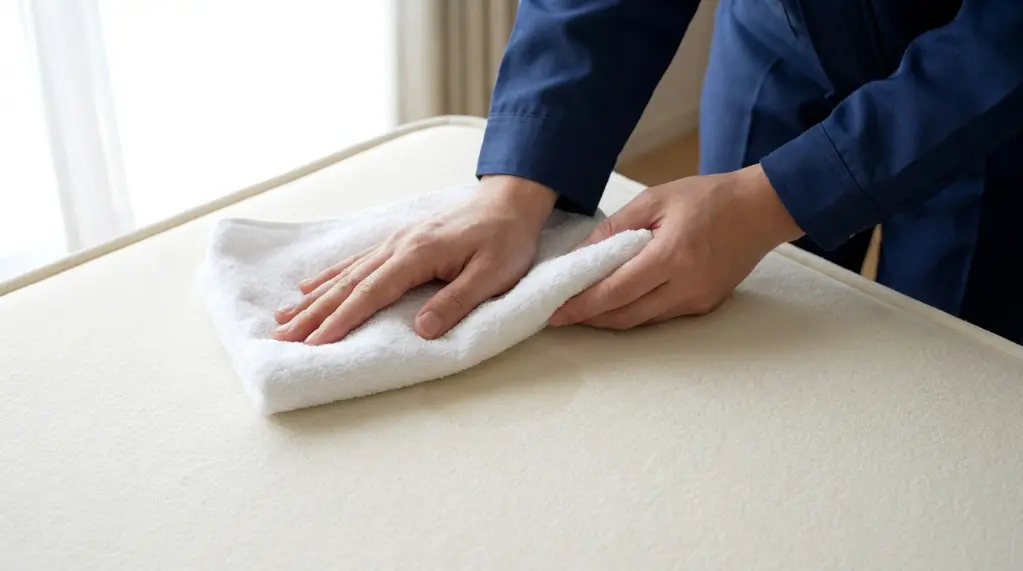
Fresh blood stains respond best to cold water, since hot water can actually set the stain into the fabric.
- Blot the stain immediately with a cold, damp cloth, working from the outside in
- Make a paste using cold water and a small amount of baking soda or salt
- Apply the paste directly to the stain and let it sit for 30 minutes
- Scrape away the dried paste gently, then blot with a clean, damp cloth
- For stubborn or dried blood, a mixture of hydrogen peroxide and a few drops of dish soap can help lift what cold water alone doesn’t fully remove
How to Clean a Mattress That Has Been Peed On
Urine stains, whether from a child, pet, or medical situation, need a slightly different approach because of both the stain and the odor involved.
- Blot up as much liquid as possible immediately with a dry towel
- Mix a solution of equal parts white vinegar and cold water, then lightly spray the area
- Let the vinegar solution sit for 5 minutes to help neutralize odor and break down the stain
- Blot dry, then sprinkle baking soda over the entire area and let it sit for several hours
- Vacuum thoroughly once dry, and for older or set in urine stains, an enzyme based cleaner works significantly better than vinegar or soap alone
Can You Use Dawn, Vinegar, or Lysol on a Mattress
This is one of the most common questions people have, so here’s a clear answer for each.
Can you use Dawn on a mattress? Yes, diluted Dawn dish soap mixed with water is safe and effective for spot treating most stains, since it’s gentle and cuts through oil based residue well.
Can you use vinegar on a mattress? Yes, white vinegar diluted with water is safe for most mattress materials and works particularly well for odor and urine stains, though it should always be used sparingly rather than saturating the fabric.
Should you spray Lysol on your mattress? This one requires more caution. Most Lysol disinfectant sprays aren’t specifically formulated for fabric or foam, and can leave a strong chemical residue if used excessively. A better option is a fabric safe disinfectant spray labeled specifically for mattresses or upholstery.
How to Disinfect a Mattress From Bed Bugs
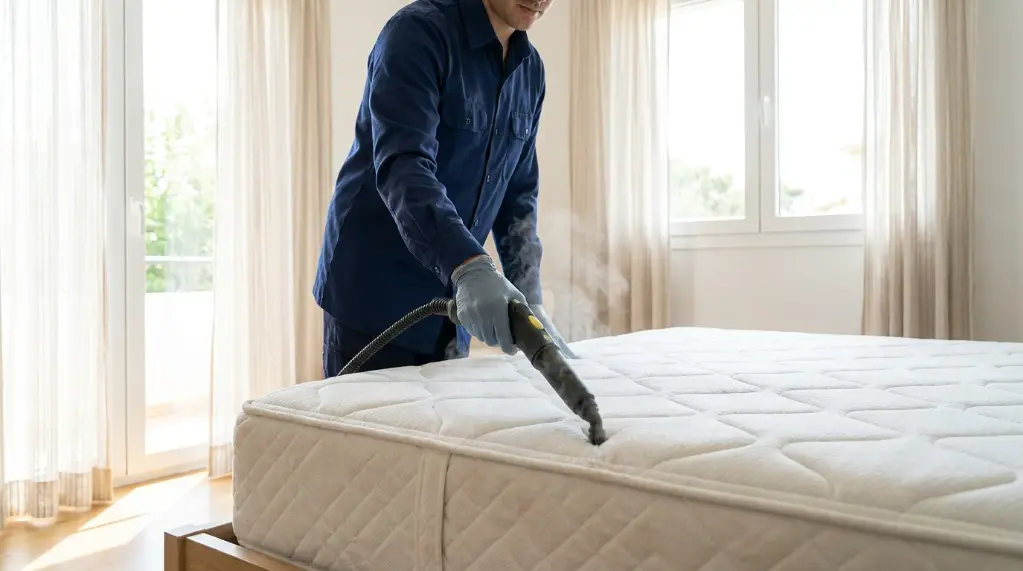
Disinfecting a mattress for bed bugs is a more involved process than general cleaning, and DIY methods alone often aren’t fully sufficient for a genuine infestation, a point supported by EPA guidance on bed bug control, which recommends combining thorough cleaning with professional treatment for confirmed infestations.
- Vacuum thoroughly, focusing on seams, tufts, and the edges of the mattress, then immediately seal and dispose of the vacuum bag outside the home
- Use a steam cleaner if available, since high heat is one of the most effective ways to kill bed bugs and their eggs on contact
- Encase the mattress in a certified bed bug proof cover afterward, which traps any remaining bugs and prevents new ones from getting in
- For a confirmed infestation, professional pest control is strongly recommended alongside cleaning, since bed bugs can hide deep within the mattress structure that surface cleaning can’t fully reach
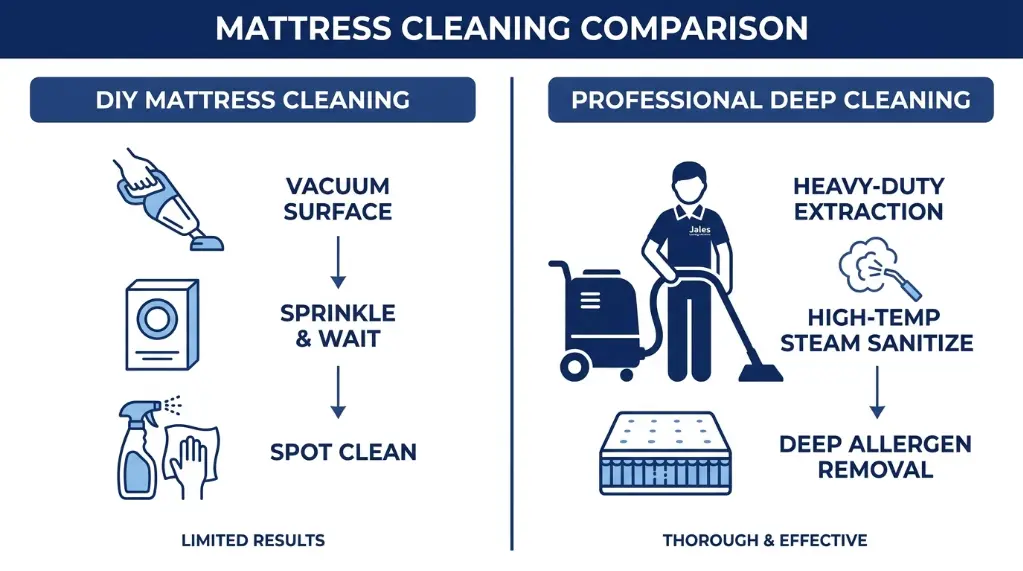
DIY vs Professional Mattress Cleaning: Comparison Table
| Method | Best For | Cost | Effectiveness |
|---|---|---|---|
| Baking Soda and Vacuum | Routine maintenance, general odor | Under $5 | Good for upkeep, not deep stains |
| Spot Treatment, Dawn, Vinegar, Peroxide | Specific stains like sweat, blood, or yellowing | Under $10 | Very good for targeted stain removal |
| Steam Cleaning | Dust mites, bed bugs, deeper sanitizing | $30 to $60 for rental, or included with professional service | Very good for sanitizing |
| Professional Mattress Cleaning | Deep set stains, allergy concerns, full sanitizing | Custom quote based on mattress size and condition | Best overall, includes deep extraction |
For most households, a combination of regular baking soda treatment and targeted spot cleaning covers the best ways to clean your mattress without ever needing to call in help. Professional cleaning becomes worthwhile for allergy sensitive households, older mattresses with years of buildup, or confirmed bed bug situations.
Common Mistakes When Cleaning a Mattress
Even when following the best ways to clean your mattress, a few common mistakes can undo your effort or make a stain worse.
- Oversaturating the mattress with liquid, which can seep into the padding and cause mold or mildew
- Using hot water on blood stains, which sets the stain rather than lifting it
- Skipping the drying step before putting sheets back on, which traps moisture inside
- Using strong chemical disinfectants not formulated for fabric, which can leave residue or damage certain mattress materials
- Assuming a single baking soda treatment removes deep set odor, when older mattresses often need two or three rounds
What Counts as Deep Cleaning a Mattress?
Deep cleaning a mattress refers to a thorough process that goes beyond surface vacuuming, involving targeted stain treatment, a full baking soda odor extraction cycle, and in many cases, steam or professional grade sanitizing to address dust mites, bacteria, and allergens embedded within the mattress fabric and padding. It differs from routine maintenance, which typically covers only vacuuming and light spot cleaning, and is generally recommended every 3 to 6 months for most households, or more frequently for allergy prone individuals.Mattress Cleaning Tips for San Jose & Bay Area Homes
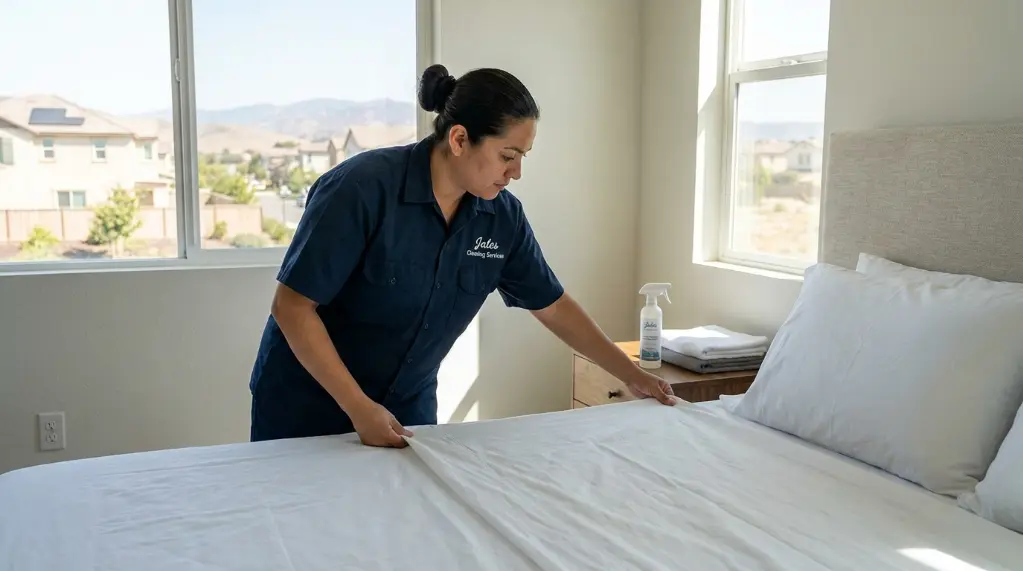
San Jose’s dry summer climate is actually an advantage when it comes to mattress cleaning, since it allows a treated mattress to fully air dry faster than in more humid regions, reducing the risk of mold or mildew forming after a deep clean.
Homeowners across San Jose neighborhoods like Almaden Valley, Willow Glen, and Evergreen, as well as nearby Santa Clara, Milpitas, Sunnyvale, and Menlo Park, should still be mindful during the rainy season between November and March, when indoor humidity rises and mattresses take noticeably longer to fully dry after any wet cleaning method.
If your Bay Area home doesn’t get much natural airflow in the bedroom, running a fan directly on the mattress after cleaning speeds up drying considerably and helps prevent the musty smell that comes from trapped moisture.
FAQs: The Best Ways to Clean Your Mattress
Final Thoughts
Knowing the best ways to clean your mattress, vacuum, spot treat, deodorize, and fully dry, keeps your bed genuinely hygienic rather than just visually tidy. Whether you’re dealing with sweat stains, an unexpected spill, or just routine upkeep, a little consistency goes a long way toward a healthier sleep environment.
If your San Jose or Bay Area mattress needs more than a DIY refresh, or your whole bedroom could use a deep clean, Jales Cleaning Services is here to help.