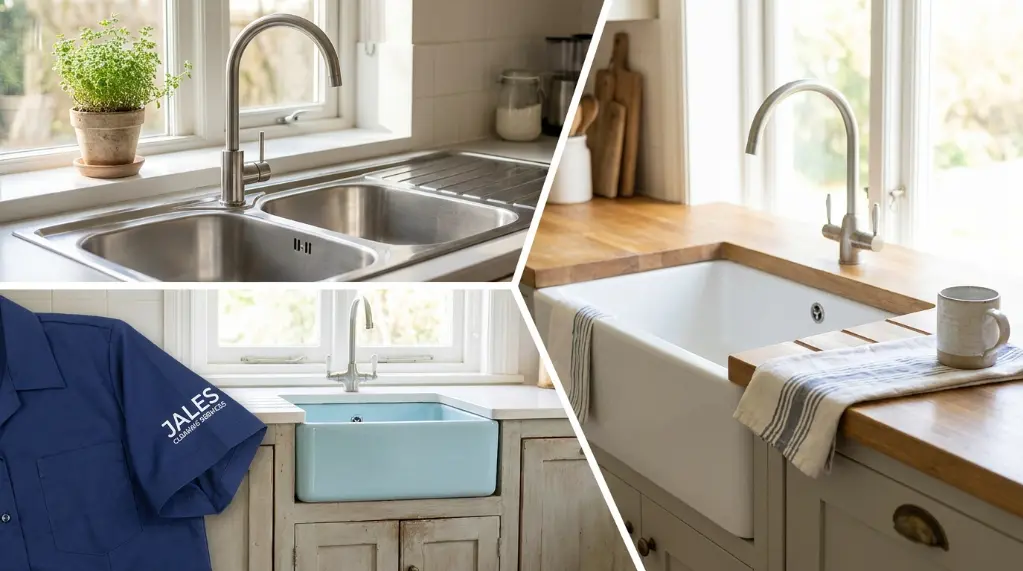
Not every sink cleans the same way, and using the wrong method on the wrong material is one of the fastest ways to dull, scratch, or stain a surface that should have lasted decades. Whether you’re standing over stainless steel, porcelain, enamel, or a composite kitchen sink, having the right quick cleaning tips sink types actually call for makes the difference between a sink that looks new for years and one that looks tired within months.
This guide from Jales Cleaning Services, serving San Jose and the greater Bay Area, walks you through quick cleaning tips sink types need by material, how to handle hard water deposits, the fastest ways to keep a kitchen or bathroom sink spotless daily, and what products actually work versus what just sounds good.
Quick answer: The fastest way to keep any sink clean is a quick rinse and dry after every use, paired with a weekly baking soda scrub. Stainless steel needs gentle, grain direction cleaning, porcelain and enamel need non abrasive products, and all sink types benefit from avoiding standing water, which is the number one cause of buildup and staining.
Table of Contents
Why Sink Material Changes the Cleaning Method
Sinks look similar at a glance, but the materials behind them react very differently to the same cleaning products. Stainless steel can scratch and streak, porcelain can chip or stain if scrubbed too hard, and enamel can dull under the wrong chemicals. This is exactly why quick cleaning tips sink types actually require aren’t one size fits all, and knowing your sink’s material before reaching for a sponge saves both time and long term damage.
Quick Cleaning Tips Sink Types Need Daily
Regardless of material, a few habits apply across almost every sink type and take less than two minutes a day.
- Rinse the sink completely after each use, since leftover food particles and soap residue are what lead to buildup over time
- Dry the surface with a cloth or towel rather than letting it air dry, since standing water is the single biggest cause of spots and mineral buildup
- Wipe down the faucet and handles daily, since hands touch these areas constantly and they’re often skipped during a quick clean
- Keep a small dish of baking soda near the sink for quick, on the spot scrubbing whenever needed
These simple, quick cleaning tips sink types benefit from daily prevent the need for a heavier deep clean later in the week.
How to Clean a Stainless Steel Sink
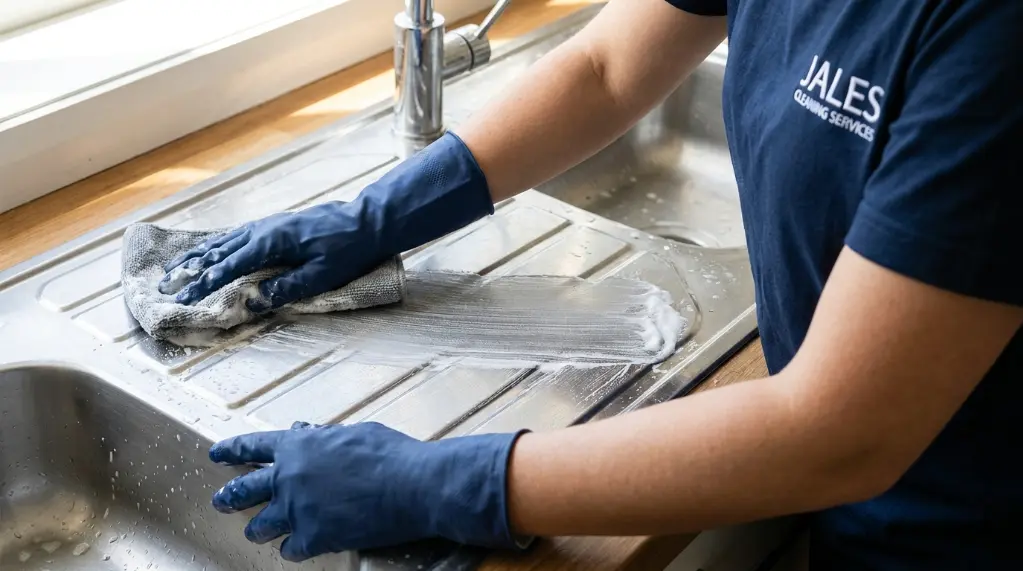
Stainless steel is one of the most common kitchen sink materials, and it responds best to gentle, direction aware cleaning.
- Rinse the sink and remove any food debris
- Sprinkle baking soda and scrub gently with the grain of the steel, not against it, using a soft cloth
- Rinse completely and dry immediately, since air drying causes water spots
- For hard water deposits specifically, a mixture of white vinegar and water applied for a few minutes before scrubbing helps dissolve mineral buildup
- Avoid chlorine based cleaners on stainless steel, since they can cause pitting and discoloration over time
For extra shine, a few drops of olive oil buffed onto a dry cloth and wiped in the direction of the grain gives stainless steel a polished, streak free finish.
How Do I Clean a Porcelain Sink
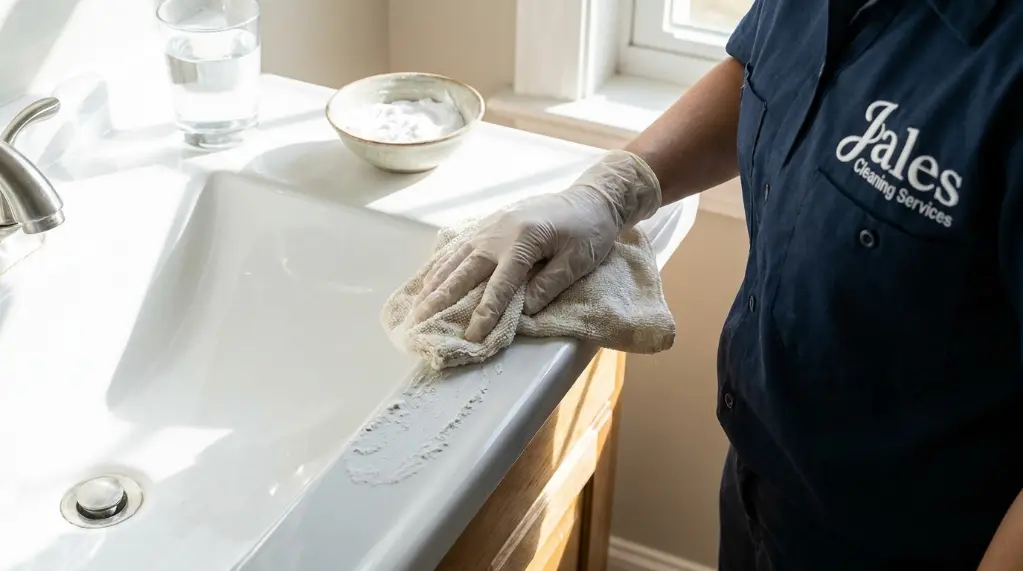
Porcelain sinks are common in bathrooms and older kitchens, and while they’re durable, the glossy surface can chip or dull if treated too roughly.
- Use a non abrasive cleaner or a paste of baking soda and water rather than harsh powders
- Apply with a soft cloth or sponge, avoiding steel wool or anything that could scratch the glaze
- For stubborn stains, a mixture of baking soda and hydrogen peroxide left for 15 minutes lifts most discoloration without damaging the surface
- Rinse thoroughly and dry to prevent water spots from forming on the glossy finish
- Avoid dropping heavy items into a porcelain sink, since the material can chip on impact even though it resists everyday scrubbing well
How to Clean an Enamel Sink
Enamel sinks, often found in farmhouse style kitchens, have a coated finish that needs slightly different care than stainless steel or plain porcelain.
- Stick to mild dish soap and warm water for daily cleaning, since harsh chemicals can wear down the enamel coating over time
- For stains, a baking soda paste applied gently is safer than commercial abrasive cleaners
- Avoid abrasive sponges entirely, since even light scratching on enamel is often permanent and visible
- Dry thoroughly after cleaning, since enamel can show water spots more visibly than stainless steel
Bar Keepers Friend, a popular cleaning product for tough stains, can be used sparingly on enamel but should always be tested in a small area first, since some formulas can be too abrasive for certain enamel finishes.
How to Clean Kitchen Sink Drain Naturally
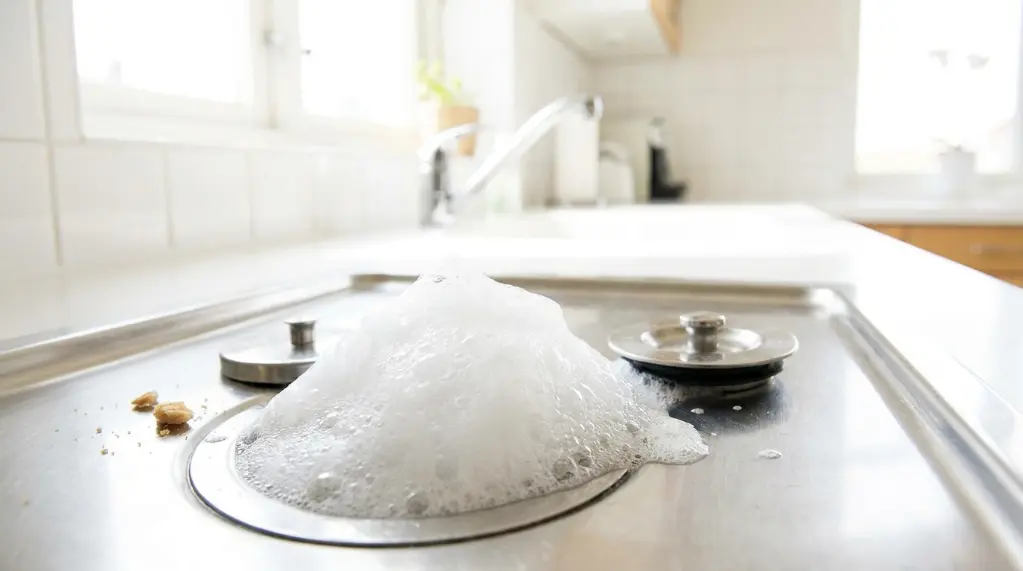
A clean sink surface doesn’t mean much if the drain underneath is building up grime and odor. Here’s how to clean kitchen sink drain naturally without harsh chemicals.
- Remove the drain stopper or strainer and rinse it separately
- Pour half a cup of baking soda down the drain, followed by half a cup of white vinegar
- Let the mixture fizz for 10 minutes, then flush with hot water
- For lingering odor, repeat weekly as part of routine maintenance
- Once a month, follow with a full pot of boiling water poured slowly down the drain to help clear any remaining grease buildup
Quick Cleaning Tips Sink Types in the Bathroom
Bathroom sinks deal with different buildup than kitchen sinks, mostly soap scum, toothpaste residue, and hard water spots rather than food debris, which means quick cleaning tips sink types need in the bathroom look slightly different from kitchen routines.
- Wipe down the sink daily with a quick swipe of a damp cloth to prevent toothpaste and soap residue from hardening
- For soap scum buildup, a vinegar and water solution left for a few minutes before wiping works faster than most commercial bathroom cleaners
- Clean around the faucet base weekly, since this is where hard water deposits tend to build up fastest in bathrooms
- For porcelain or enamel bathroom sinks, follow the same gentle, non abrasive approach outlined above for kitchen sinks of the same material
Kitchen Sink Cleaning Products That Actually Work
With so many kitchen sink cleaning liquid options on shelves, it helps to know which actually deliver results for each material.
- Baking soda: A safe, gentle abrasive that works on nearly every sink material without risk of scratching
- White vinegar: Excellent for hard water deposits and drain odor, though it should be used sparingly on natural stone composite sinks
- Bar Keepers Friend: Effective on stainless steel and some enamel for tough stains, but should be spot tested first on delicate finishes
- Mild dish soap: The safest daily option across nearly all sink types, since it cleans without stripping protective coatings
Avoid bleach based cleaners on stainless steel and enamel specifically, since both materials can discolor or pit with repeated bleach exposure over time.
Sink Cleaning Comparison Table by Material
| Sink Material | Best Cleaner | Cleaning Frequency | Watch Out For |
|---|---|---|---|
| Stainless Steel | Baking soda, mild soap, vinegar for hard water | Daily rinse, weekly deep clean | Scratching against the grain, chlorine cleaners |
| Porcelain | Baking soda paste, non abrasive cleaner | Daily rinse, weekly deep clean | Chipping from dropped items, abrasive powders |
| Enamel | Mild soap, gentle baking soda paste | Daily rinse, weekly deep clean | Abrasive sponges, harsh chemical cleaners |
| Composite or Granite | Warm water, mild soap, occasional resealing | Daily rinse, monthly deep clean | Bleach, acidic cleaners like straight vinegar |
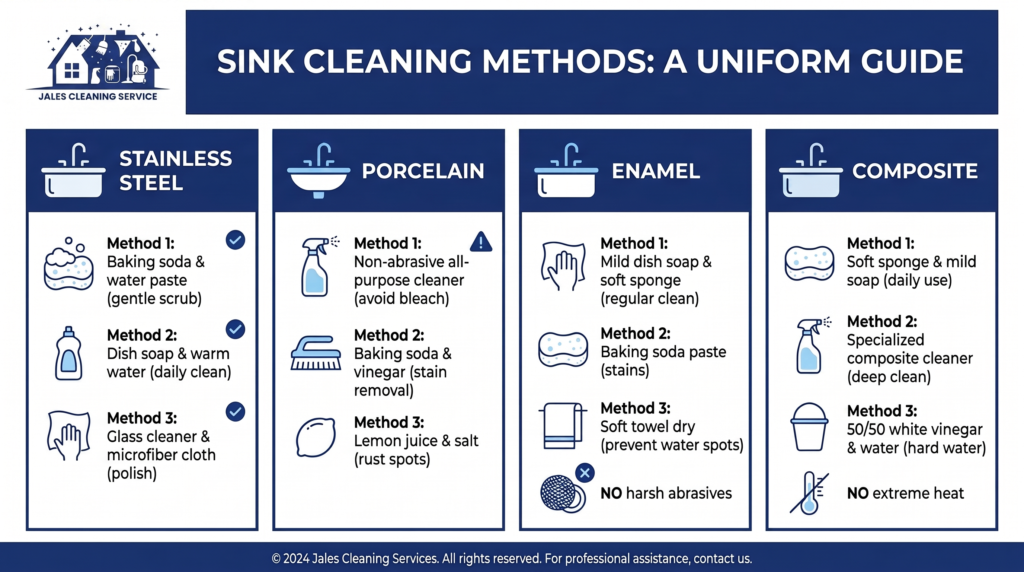
Common Mistakes When Cleaning Different Sink Types
- Using the same cleaning method on every sink material, when stainless steel, porcelain, and enamel all require different approaches
- Scrubbing stainless steel against the grain, which leaves visible streaks even after rinsing
- Using abrasive powders or steel wool on porcelain or enamel, which causes permanent scratching
- Letting water sit in the sink instead of drying it, which is the leading cause of spots and mineral buildup across every material
- Skipping the drain entirely, since a clean basin with a dirty drain still leads to lingering odor
What Is the 3 Sink Cleaning Process?
The 3 sink cleaning process, most commonly used in commercial kitchens and increasingly recommended for thorough home cleaning, and outlined in food safety three sink method guidance, involves washing dishes or surfaces in one sink, rinsing in a second sink, and sanitizing in a third. While most homes only have a single sink, the same three step logic, wash, rinse, sanitize, applies directly to quick cleaning tips sink types benefit from at home: clean with soap, rinse thoroughly, then disinfect the surface for a truly sanitary result rather than stopping after just a rinse.Sink Cleaning Tips for San Jose & Bay Area Homes
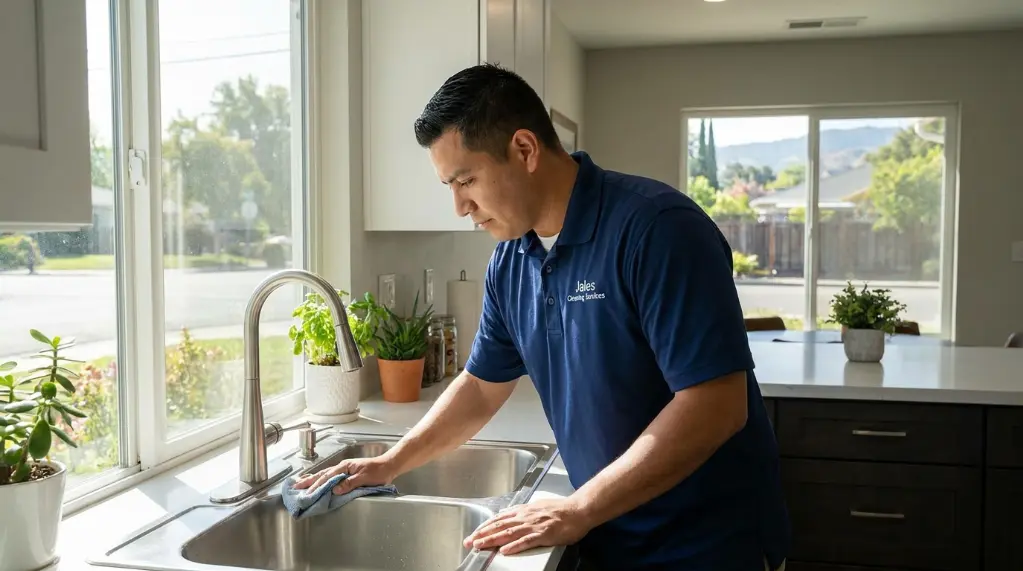
San Jose’s water tends to run harder than in many parts of the country, a pattern reflected in water hardness data, which means mineral buildup and water spots on sinks, regardless of material, tend to appear faster here than in regions with naturally softer water.
Homeowners across San Jose neighborhoods like Almaden Valley, Willow Glen, and Evergreen, as well as nearby Santa Clara, Cupertino, Sunnyvale, and Palo Alto, often see the biggest difference simply by drying their sink completely after each use rather than air drying, since hard water spots set in noticeably faster in this region.
If your San Jose home has an older stainless steel or enamel sink, a monthly deep clean using the vinegar soak method for hard water deposits helps prevent the dull, spotty look that builds up faster here than in lower mineral water areas.
FAQs: Quick Cleaning Tips Sink Types
Final Thoughts
Knowing the right quick cleaning tips sink types actually need, rather than treating every sink the same, keeps stainless steel, porcelain, enamel, and composite surfaces looking new for far longer. A daily rinse and dry paired with the right weekly product for your specific sink material prevents most of the buildup, staining, and dullness homeowners deal with over time.
If your San Jose kitchen or bathroom needs more than a sink refresh, Jales Cleaning Services is here to help with a full home deep clean that goes beyond what a quick DIY session can cover.