Store-bought leather cleaners often cost more than they need to, and many contain harsh chemicals that can dry out or discolor real leather over time. A simple diy leather cleaner made from ingredients already in your kitchen can clean, condition, and protect leather furniture, bags, and car seats just as effectively, without the risk of damaging the material.
This guide from Jales Cleaning Services, serving San Jose and the greater Bay Area, walks you through exactly how to make a diy leather cleaner, how to safely clean leather furniture, how to get stains out of leather, and when it’s time to call a professional instead of reaching for another homemade recipe.
Quick answer: A basic diy leather cleaner is made from mild soap and warm water for regular cleaning, or equal parts white vinegar and olive oil for a deeper clean and condition. Always test on a hidden area first, apply with a soft cloth, and never soak leather, since excess moisture damages the material.
Table of Contents
Why Use a DIY Leather Cleaner
Real leather is a natural material, and like skin, it needs gentle, pH-balanced care rather than harsh detergents or alcohol-based cleaners, a principle echoed by the Leather Research Laboratory, the only academic leather-testing center in the United States. A diy leather cleaner gives you full control over what touches your furniture, bags, or car interior, and it’s typically far cheaper than commercial leather cleaning products.
The main advantages of a diy leather cleaner include:
- Lower cost, using ingredients most households already have
- No unknown chemicals or synthetic fragrances that can affect sensitive skin or aggravate allergies
- Full control over strength, so you can adjust for elicate or vintage leather
- Dual-purpose cleaning and conditioning in a single homemade solution
What You’ll Need
Before mixing your diy leather cleaner, gather these simple supplies.
- Mild dish soap or castile soap
- Distilled water (tap water can leave mineral spots on some leather)
- White vinegar
- Olive oil or coconut oil
- Two soft, clean microfiber cloths
- A soft-bristled brush for textured or pebbled leather
- A spray bottle for easy application
Avoid baby wipes, household all-purpose cleaners, or anything containing alcohol or ammonia, since these strip leather’s natural oils and cause cracking over time.
DIY Leather Cleaner Recipes
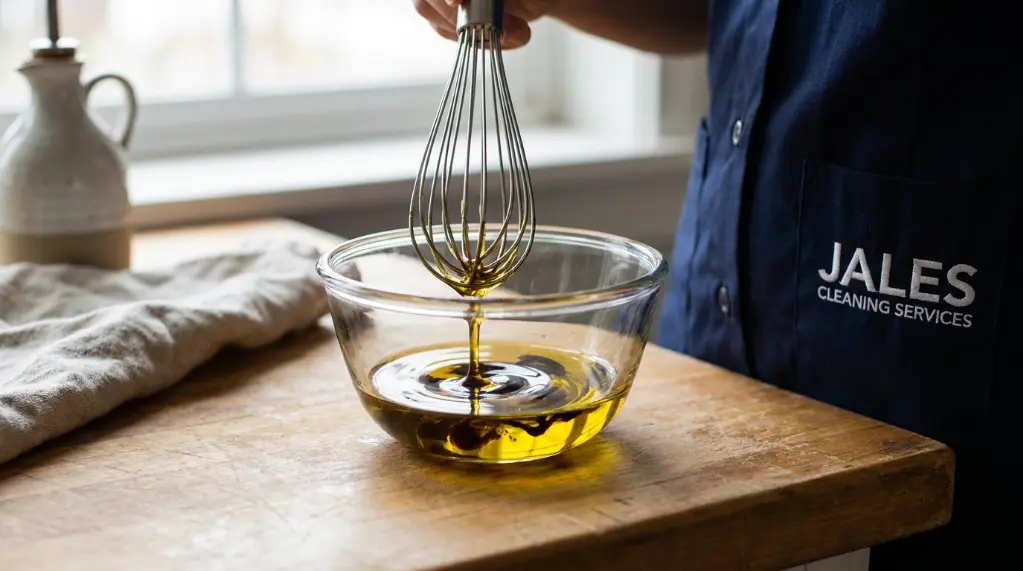
Here are two reliable diy leather cleaner recipes, one for routine cleaning and one for a deeper clean with conditioning.
Recipe 1: Everyday DIY Leather Cleaner
Mix 1 teaspoon of mild dish soap or castile soap with 2 cups of warm distilled water in a spray bottle. This gentle solution is safe for weekly dusting and light cleaning on most leather furniture and accessories.
Recipe 2: Deep Clean & Condition DIY Leather Cleaner
Combine 1 part white vinegar with 2 parts olive oil in a small bowl or spray bottle. The vinegar lifts dirt and grime while the oil restores moisture, making this the better choice for a homemade leather cleaner that also conditions.
Always shake or stir before each use, since oil and vinegar separate quickly, and store any leftover solution in a sealed container for up to two weeks.
How to Clean the Leather: Step by Step
Here is exactly how to clean the leather using either diy leather cleaner recipe above.
Step 1: Dust First
Wipe the entire surface with a dry microfiber cloth to remove loose dust and debris before applying any liquid.
Step 2: Spot Test
Apply a small amount of your diy leather cleaner to a hidden area, such as the underside of a cushion, and wait 10 minutes to check for discoloration.
Step 3: Apply the Cleaner
Lightly spray or dab the solution onto a clean cloth, never directly onto the leather, and wipe in gentle, circular motions.
Step 4: Wipe Away Residue
Use a second, slightly damp cloth to remove any leftover soap or vinegar residue from the surface.
Step 5: Dry Naturally
Let the leather air dry away from direct sunlight or heat sources, which can cause cracking or fading.
Step 6: Condition If Needed
If the leather feels dry after cleaning, apply a small amount of olive oil or coconut oil with a clean cloth, working it in gently, then buff with a dry cloth.
How Can I Clean a Leather Couch Without Damaging It?
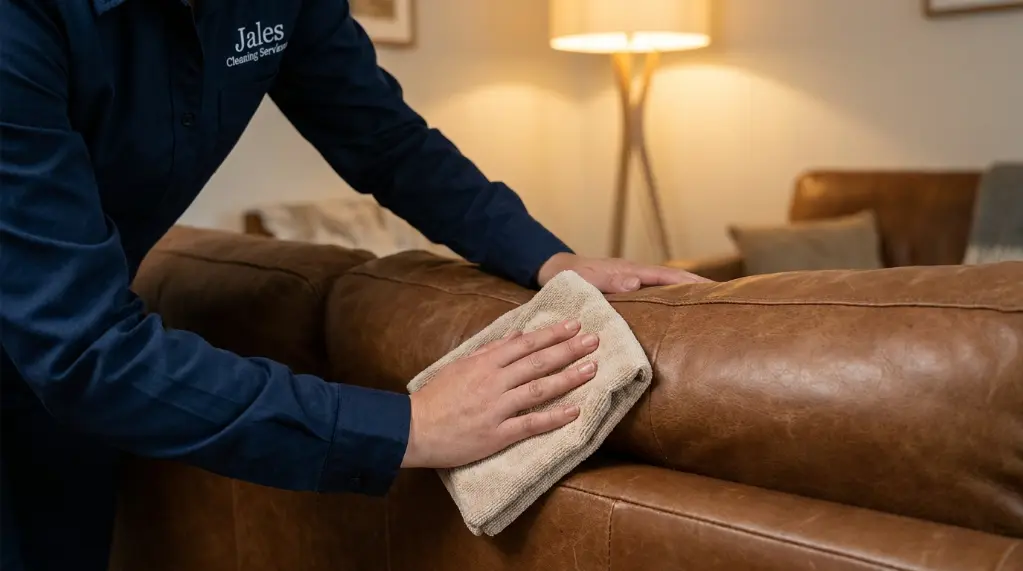
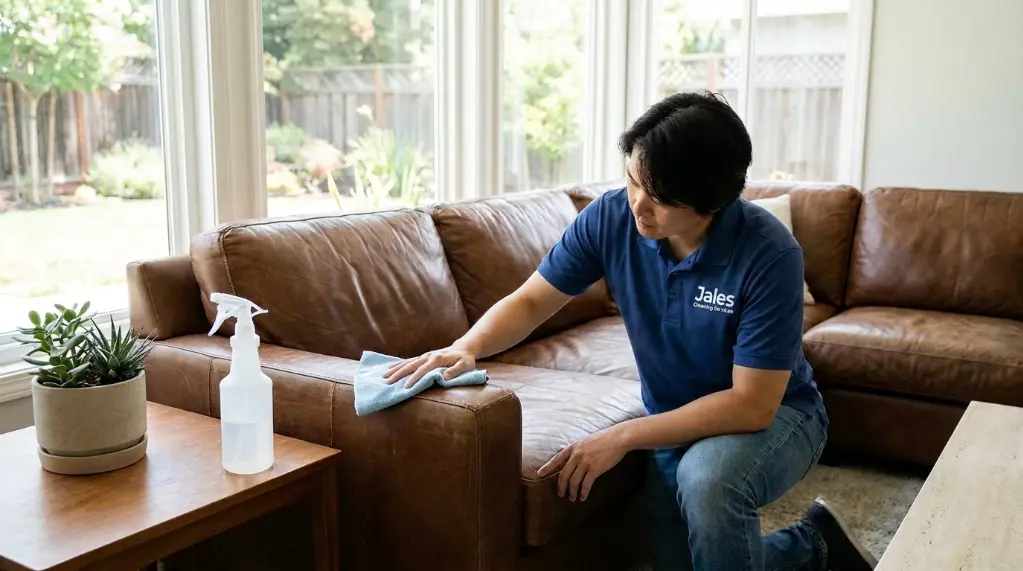
Cleaning a leather couch requires a bit more caution than smaller leather items, since larger surfaces are harder to spot-check evenly and often see more daily wear. As interior care experts recommend, always check the manufacturer’s cleaning code on the furniture tag before applying any solution, since some leather finishes only tolerate dry or solvent-based cleaning.
- Vacuum crevices and seams first with a soft brush attachment to remove crumbs and debris
- Use the everyday DIY leather cleaner recipe for regular upkeep, applying it section by section rather than all at once
- Work in small, manageable areas, drying each section before moving to the next
- For a full leather couch cleaning, plan for 30 to 45 minutes depending on size
- Condition every 3 to 6 months to prevent cracking, especially in San Jose’s drier climate, which pulls moisture from leather faster than more humid regions
How to Get Stains Out of Leather
Learning how to get stains out of leather depends heavily on what caused the stain. Here’s how to handle the most common types:
Water Stains: Dampen the entire area evenly with a cloth to blend the stain into the surrounding leather, then let it air dry completely.
Oil or Grease Stains: Sprinkle cornstarch or baking soda directly onto the stain, let it sit for several hours or overnight to absorb the oil, then brush away and wipe with a dry cloth.
Ink Stains: Dab, don’t rub, a small amount of rubbing alcohol on a cotton swab directly on the ink, testing on a hidden area first, since this method isn’t safe for all leather finishes.
Food or Drink Stains: Use your everyday diy leather cleaner solution, gently working from the outside of the stain inward to avoid spreading it further.
Old, Set-In Stains: These often need more than one treatment. If a stain doesn’t lift after two attempts with a homemade leather cleaner, avoid repeated scrubbing, which can damage the finish, and consider a professional leather cleaning service instead.
DIY Leather Cleaner for Car Seats
Car leather deals with more sun exposure, temperature swings, and body oils than furniture, so it needs slightly more frequent care.
- Use the everyday diy leather cleaner recipe weekly, focusing on high-contact areas like the seat bottom and armrests
- Condition car seats more often than furniture, every 6 to 8 weeks, since heat from sun exposure through car windows dries out leather faster
- Crack open windows while the interior dries to prevent trapped moisture and odor
- Avoid cleaning leather car seats in direct, hot sunlight, since heat can cause the cleaning solution to dry too quickly and leave streaks
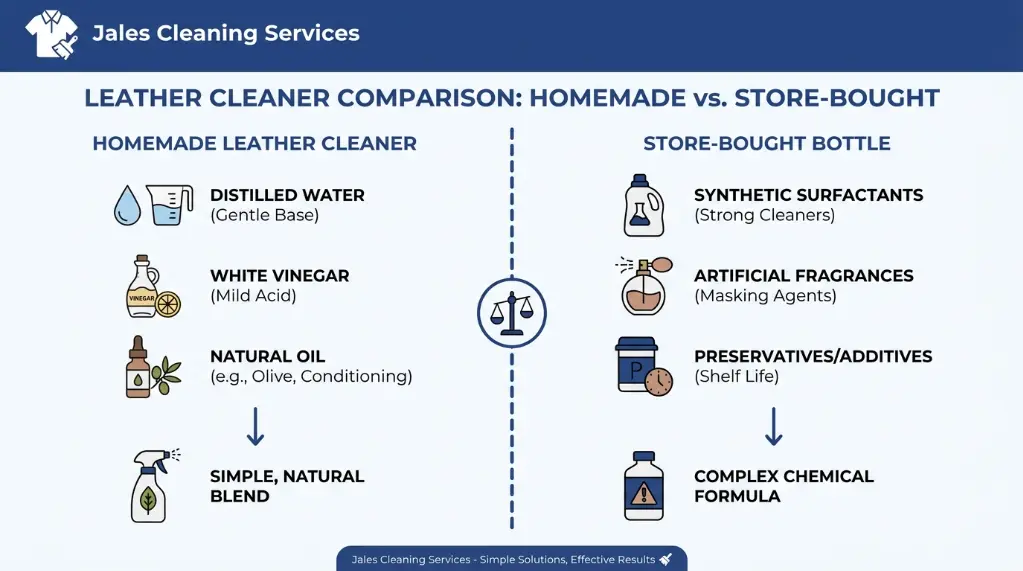
Homemade Leather Cleaner vs Store-Bought: Comparison Table
| Method | Best For | Cost | Effectiveness |
|---|---|---|---|
| DIY Leather Cleaner (Soap & Water) | Weekly dusting, light dirt, everyday upkeep | Under $2 per batch | Good for maintenance, gentle |
| DIY Leather Cleaner (Vinegar & Oil) | Deeper cleaning plus conditioning | Under $5 per batch | Very good for cleaning and moisture restoration |
| Store-Bought Leather Cleaner | Convenience, pre-mixed formulas | $10–$25 per bottle | Good, but may contain harsher chemicals |
| Professional Leather Cleaning Service | Antique, delicate, or heavily stained leather furniture | Custom quote based on size and condition | Best overall, safest for valuable or delicate pieces |
For most everyday cleaning, a diy leather cleaner performs just as well as store-bought options, at a fraction of the cost. Save the professional route for stains that won’t budge or leather that’s genuinely valuable.
Common Mistakes When Cleaning Leather Furniture
- Soaking the leather, which causes warping, staining, and long-term damage to the material
- Skipping the spot test, which can lead to discoloration on dyed or pigmented leather
- Using household cleaners with alcohol or ammonia, which strip natural oils and cause cracking
- Drying leather near direct heat or sunlight, which speeds up cracking and fading
- Scrubbing instead of blotting, which can push stains deeper or damage the leather’s finish
What Is Full-Grain vs Bonded Leather:
Full-grain leather is the highest-quality leather, made from the outermost layer of the hide with its natural texture and grain fully intact, making it durable and long-lasting but also more sensitive to harsh cleaning products. Bonded leather, by contrast, is made from leftover leather scraps bonded together with adhesive and a polyurethane coating, making it far less durable and unable to tolerate the same cleaning methods as genuine leather. Knowing which type you have is essential before applying any diy leather cleaner, since bonded leather generally should only be wiped with a barely damp cloth rather than treated with oil-based solutions.Leather Care Tips for San Jose & Bay Area Homes
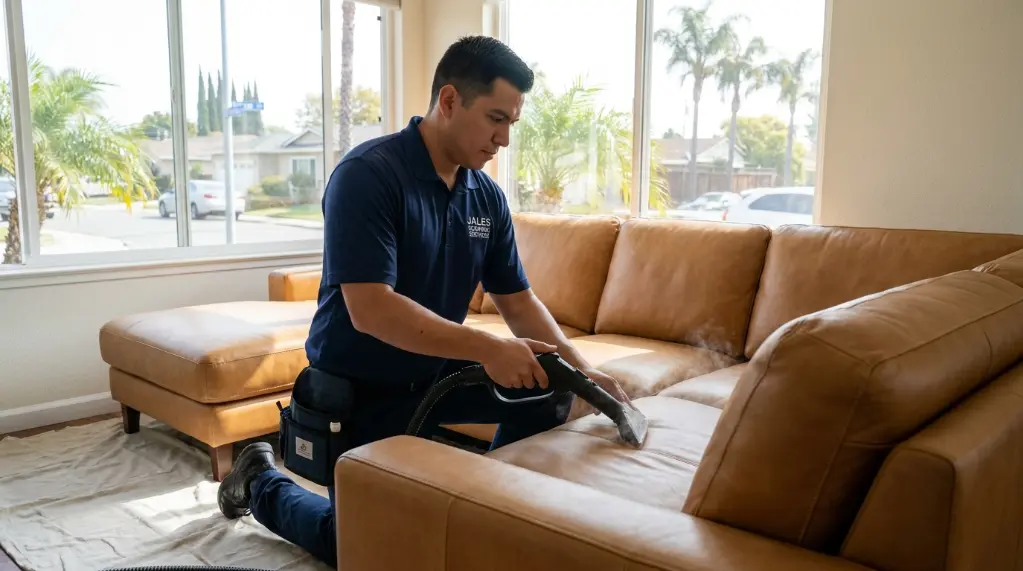
San Jose’s dry, warm climate, especially during the summer months, pulls moisture out of leather faster than more humid regions, which means conditioning matters even more here than in coastal or northern climates.
Homeowners across San Jose neighborhoods like Almaden Valley, Willow Glen, and Evergreen, as well as nearby Santa Clara, Campbell, Sunnyvale, Palo Alto and Los Gatos, should pay close attention to leather furniture placed near south-facing windows, since direct sun exposure combined with San Jose’s low humidity accelerates cracking more than in shaded rooms.
If your leather furniture sits near a heater vent or fireplace, move it slightly out of direct airflow when possible, since consistent dry heat is one of the fastest ways to age leather prematurely in Bay Area homes.
FAQs: DIY Leather Cleaner
Final Thoughts
A good diy leather cleaner, whether it’s a simple soap and water mix or a deeper vinegar and oil blend, can keep leather furniture, car seats, and accessories looking their best for years, without the cost or chemicals of store-bought products. The key is gentle, consistent care: dust often, spot test always, and condition regularly, especially in San Jose’s dry climate.
If your leather furniture needs more than a DIY refresh, or your whole home could use a deep clean, Jales Cleaning Services is here for San Jose and Bay Area homeowners.