
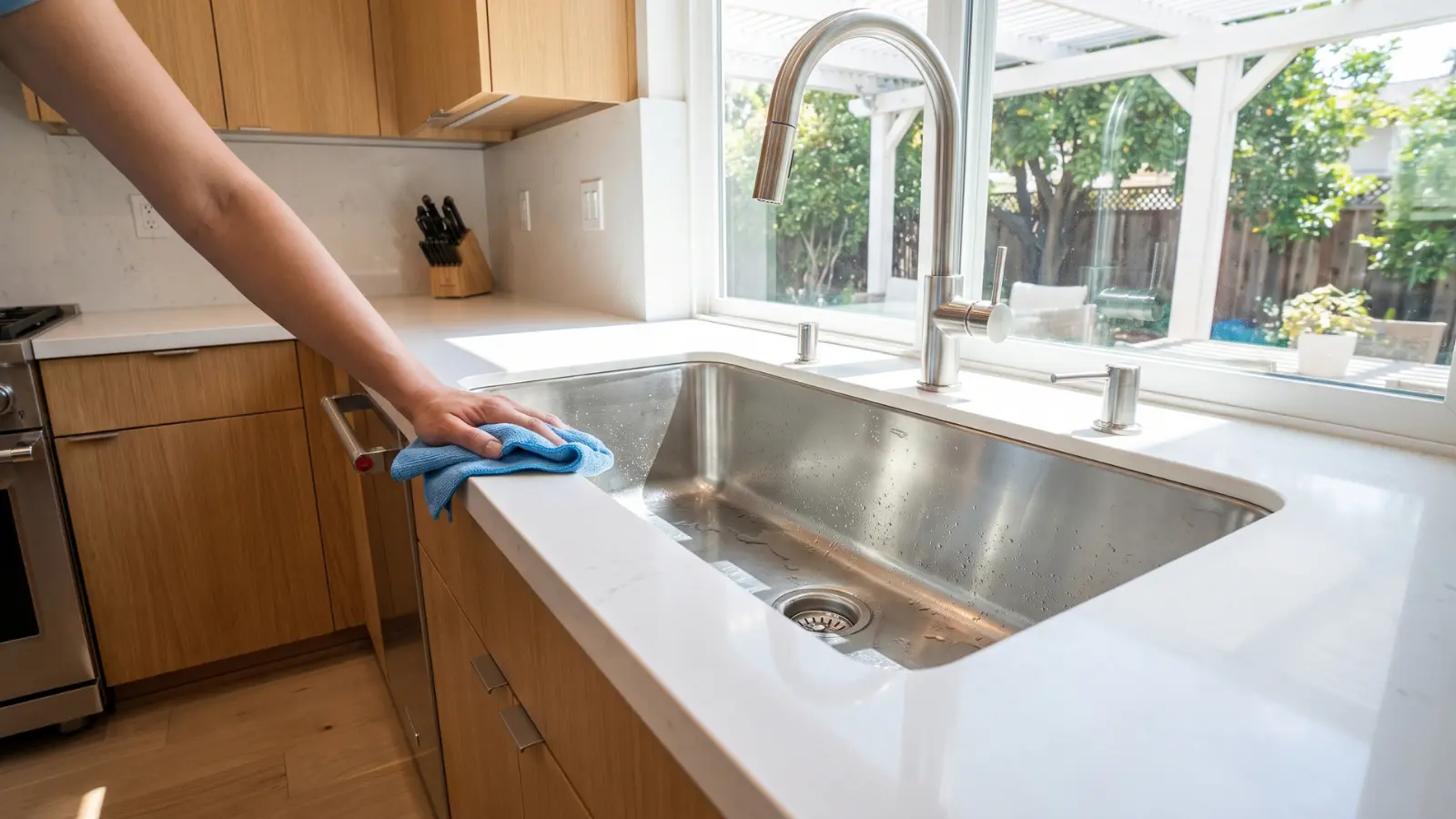
Your kitchen sink handles more daily bacteria than almost any other spot in your home, more than your bathroom, according to several studies on household germ hotspots. Yet it’s often the last thing people think to deep clean. If you’ve been searching how to clean kitchen sink properly, whether it’s stainless steel, granite composite, or porcelain, this guide covers everything from daily upkeep to disinfecting and unclogging the drain.
This guide from Jales Cleaning Services, serving San Jose and the greater Bay Area, walks you through exactly how to clean kitchen sink by material type, how to disinfect it safely, and how to keep it looking new between deep cleans.
Quick answer: Clear the sink, rinse with warm water, scrub with baking soda and a soft cloth (or a material-specific cleaner for stainless steel or granite), rinse thoroughly, then disinfect with a diluted vinegar or disinfectant spray and dry completely to prevent water spots and buildup.
Table of Contents
What You’ll Need
Before learning how to clean kitchen sink the right way, gather these basic supplies. Most are already under your sink or in your pantry.
- Baking soda
- White vinegar
- Dish soap
- A soft microfiber cloth or non-abrasive sponge
- An old toothbrush for tight corners and the drain area
- A disinfectant spray or diluted bleach solution (for non-granite sinks only)
- A dry towel for the final buff
Avoid steel wool or abrasive scrub pads on stainless steel, granite composite, or coated sinks, since they can scratch the surface permanently. studies on household germ hotspots
How to Clean Kitchen Sink: Step by Step
Here is exactly how to clean kitchen sink from start to finish, regardless of material.
Step 1: Clear and Rinse
Remove dishes, food scraps, and any items from the sink. Rinse the entire basin with warm water to loosen loose debris before applying any cleaner.
Step 2: Sprinkle Baking Soda
Cover the surface of the sink with a light layer of baking soda. It works as a gentle, non-scratch abrasive that lifts grime without damaging the finish.
Step 3: Scrub Gently
Using a soft cloth or non-abrasive sponge, scrub in circular motions, paying extra attention to the corners, around the faucet base, and near the drain.
Step 4: Rinse Thoroughly
Rinse away all baking soda residue with warm water, making sure no gritty texture remains on the surface.
Step 5: Disinfect
Spray a disinfectant or a mix of equal parts white vinegar and water over the entire sink, including the faucet handles, and let it sit for 5 minutes.
Step 6: Dry and Buff
Wipe the sink completely dry with a clean towel. This final step is what prevents water spots, especially on stainless steel, and keeps the surface looking polished.
How to Clean Stainless Steel Sink
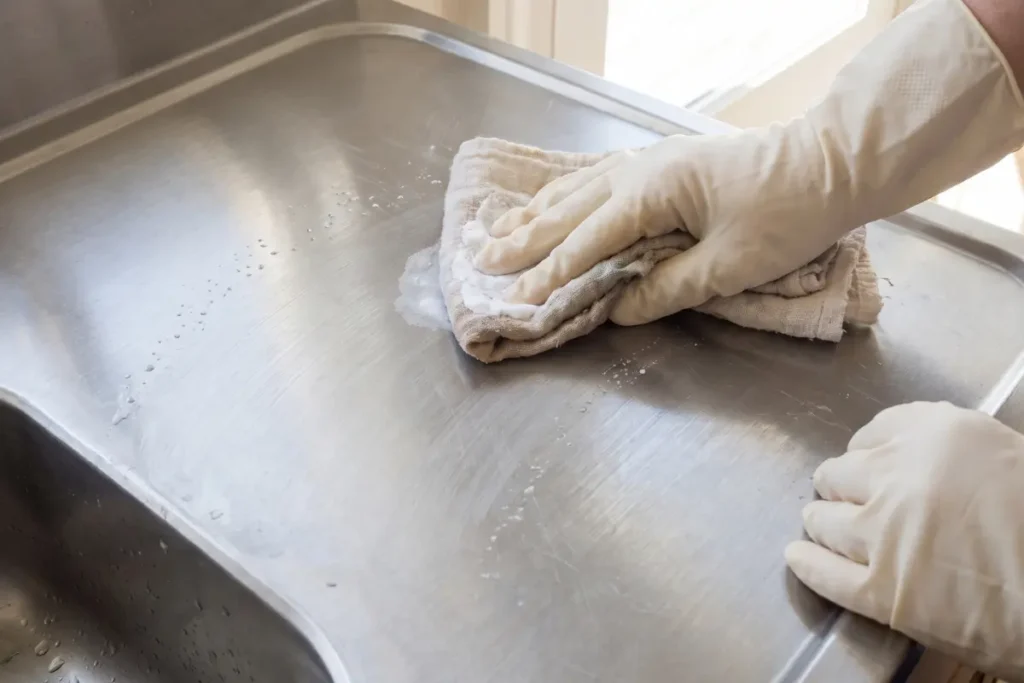
Cleaning stainless steel sinks requires a slightly different approach to avoid streaks and dullness. Here’s how to clean stainless steel sink so it shines like new:
- Rinse the sink and remove any food debris
- Sprinkle baking soda and scrub gently with the grain of the steel, not against it, using a soft cloth
- Rinse completely and dry immediately, since air-drying causes water spots
- For extra shine, buff a few drops of olive oil or a dedicated stainless steel polish onto a dry cloth and wipe in the direction of the grain
- Avoid chlorine-based cleaners on stainless steel, since they can cause pitting and discoloration over time
This method for cleaning stainless steel sinks works for both matte and polished finishes and takes less than 10 minutes once you have a routine down.
How to Clean Granite and Composite Kitchen Sink
Granite composite sinks are more porous than stainless steel and need gentler care to avoid dulling the finish.
- Use warm water and a mild dish soap for daily cleaning rather than harsh chemicals
- For stuck-on stains, make a paste of baking soda and water, apply it, and let it sit for 10 minutes before scrubbing gently
- Avoid bleach and abrasive powders entirely, since they can strip the sink’s protective coating and cause permanent dullness
- Rinse and dry after every use to prevent mineral buildup, which is more visible on composite surfaces than stainless steel. Manufacturer’s official care guide for composite sinks
How to Clean Porcelain, White, or Black Kitchen Sink
White and black kitchen sinks show stains more visibly, so consistent care matters more than deep cleaning frequency.
- For a white kitchen sink, a paste of baking soda and hydrogen peroxide left for 15 minutes lifts most staining and discoloration
- For a black kitchen sink, stick with baking soda and a soft cloth, since hydrogen peroxide can leave lighter patches on darker finishes
- Rinse both types thoroughly and dry immediately to avoid hard water spots, which show up more clearly on light and dark solid colors than on stainless steel
How to Clean Sink Drain and Aerator
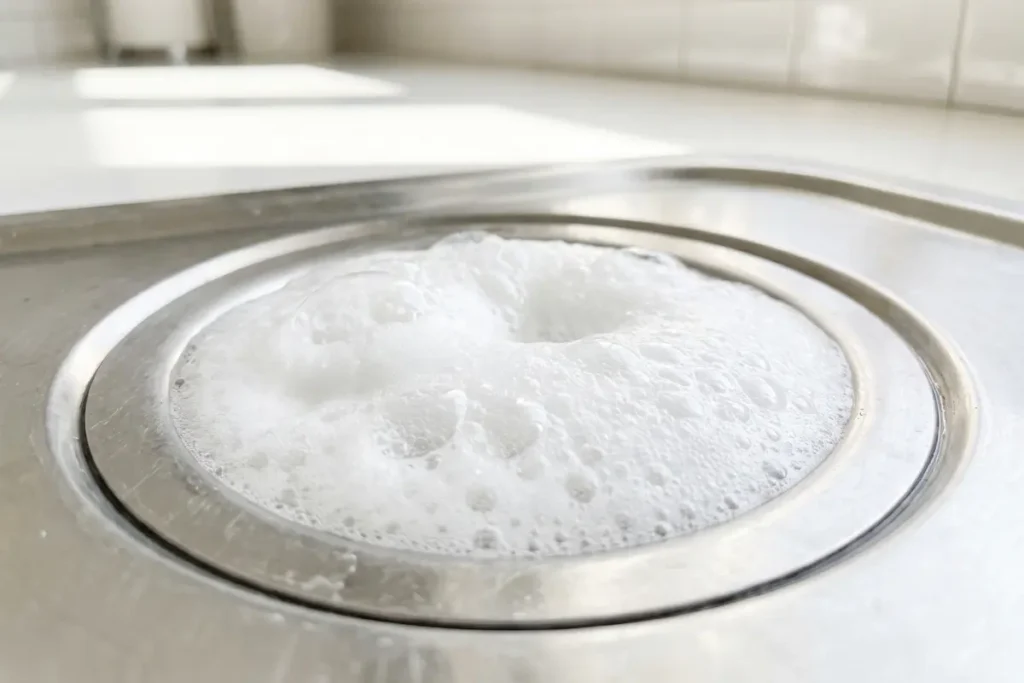
A clean sink surface doesn’t mean much if the drain and faucet aerator are building up grime and odor underneath. Here’s how to clean sink drain and the aerator properly:
Cleaning the Drain
- Remove the drain stopper or strainer and rinse it separately
- Pour half a cup of baking soda down the drain, followed by half a cup of white vinegar
- Let the mixture fizz for 10 minutes, then flush with hot water
- For lingering odor, repeat weekly as part of routine maintenance
Cleaning the Faucet Aerator
- Unscrew the aerator from the tip of the faucet
- Soak it in a bowl of white vinegar for 30 minutes to dissolve mineral buildup
- Use an old toothbrush to scrub away any remaining residue
- Rinse and reattach, checking that water flow has improved
How to Disinfect Sink Safely
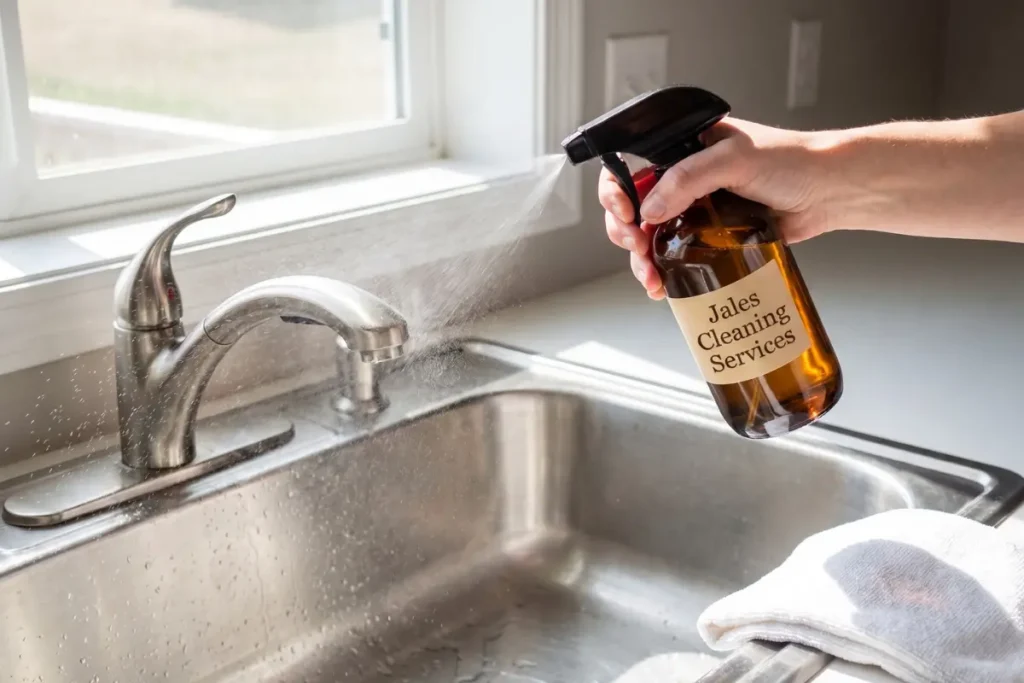
Learning how to disinfect sink surfaces properly matters just as much as the visual clean. Bacteria from raw meat, poultry, and produce can linger on sink surfaces long after rinsing.
- Use a disinfectant spray labeled for kitchen surfaces, or mix 1 tablespoon of unscented bleach with 1 gallon of water for non-granite sinks
- Apply to the entire basin, faucet handles, and the area around the drain, then let sit for the time listed on the product label, typically 5 to 10 minutes
- Rinse thoroughly with clean water afterward, especially if using a bleach solution
- For granite or composite sinks, use a vinegar-based disinfectant instead of bleach to avoid damaging the sealant
Disinfecting once or twice a week, especially after handling raw meat, is enough for most households. CDC guidance on kitchen surface disinfection
Daily vs Weekly vs Deep Clean: Comparison Table
| Cleaning Frequency | What to Do | Time Needed | Best For |
|---|---|---|---|
| Daily | Rinse, wipe with a cloth, dry completely | 1–2 minutes | Preventing water spots and daily buildup |
| Weekly | Baking soda scrub, drain flush with vinegar | 10–15 minutes | Removing grime, odor, and mineral buildup |
| Deep Clean (Monthly) | Full disinfecting, aerator soak, stain treatment | 30–40 minutes | Stainless steel shine, drain odor, stuck-on stains |
| Professional Deep Clean | Full kitchen deep clean including sink, counters, and appliances | Varies by home size | Move-outs, seasonal deep cleans, or busy households |
Jales Cleaning Services includes a full sink and kitchen detail as part of every deep cleaning visit, priced at $0.39 per square foot, so your sink gets the same professional-grade attention as the rest of your kitchen.
Common Mistakes When Cleaning Stainless Steel Sinks
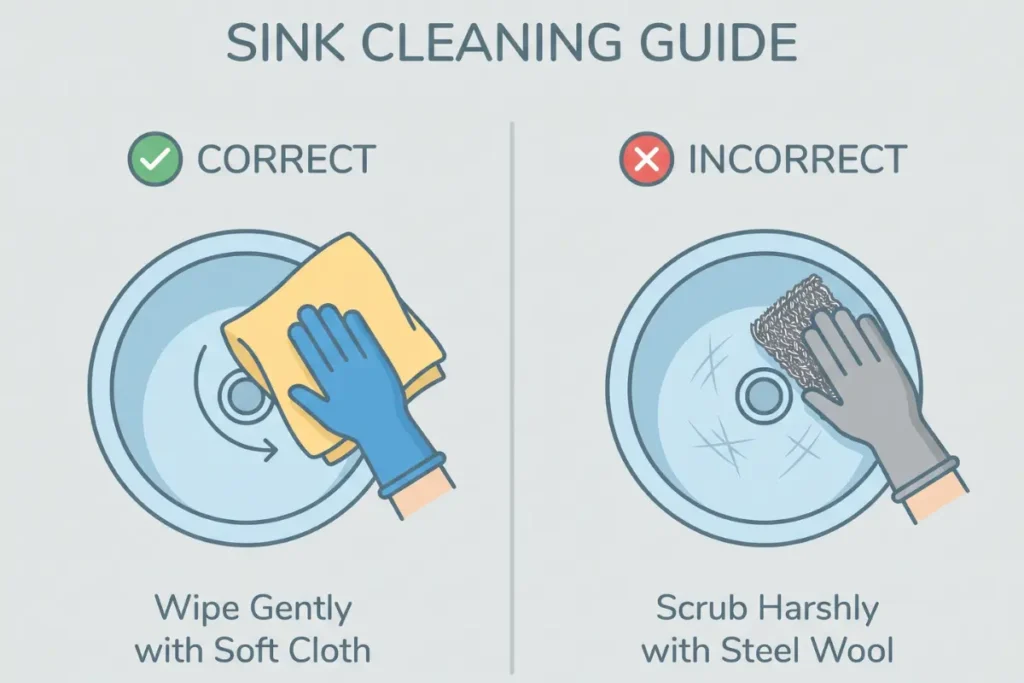
- Using steel wool or abrasive pads, which scratch the surface and create grooves where grime collects
- Scrubbing against the grain, which leaves visible streaks on stainless steel
- Skipping the dry step, which causes water spots and mineral buildup over time
- Using chlorine bleach directly on stainless steel, which can cause pitting and discoloration
- Ignoring the drain and aerator, since a clean basin with a dirty drain still causes lingering odor
What Is a Composite Sink: A composite sink is a kitchen sink made from a blend of natural stone materials, typically granite or quartz particles, combined with resin to form a durable, non-porous surface. Composite sinks are prized for scratch and heat resistance but require gentler cleaning methods than stainless steel, since harsh chemicals and abrasive scrubbing can wear down the resin coating over time, which is why understanding how to clean kitchen sink materials correctly matters more with composite than with standard stainless steel.
Kitchen Sink Cleaning Tips for San Jose & Bay Area Homes

San Jose’s water tends to run harder than in many parts of the country, which means mineral buildup and water spots on your kitchen sink can appear faster than homeowners expect, especially on stainless steel and darker sink finishes.
Homeowners across San Jose neighborhoods like Almaden Valley, Willow Glen, and Evergreen, as well as nearby Santa Clara, Campbell, Sunnyvale, and Los Gatos, often benefit from drying their sink completely after each use rather than air-drying, since hard water spots set in faster in this region than in more humid parts of the Bay Area.
If your home has an older granite composite or porcelain sink, a monthly deep clean is especially worthwhile in San Jose’s climate, since mineral deposits from hard water can dull the finish faster than in newer homes with water softening systems.
FAQs: How to Clean Kitchen Sink
Final Thoughts
Knowing how to clean kitchen sink properly, by material type, with the right products, and with regular drain and aerator care, keeps your kitchen’s busiest surface both spotless and genuinely sanitary. A quick daily rinse and dry, paired with a weekly baking soda scrub, prevents most buildup before it starts.
If your kitchen needs more than a sink refresh, Jales Cleaning Services is here for San Jose and Bay Area homeowners with full kitchen and home deep cleaning that goes well beyond what a quick DIY session can cover.