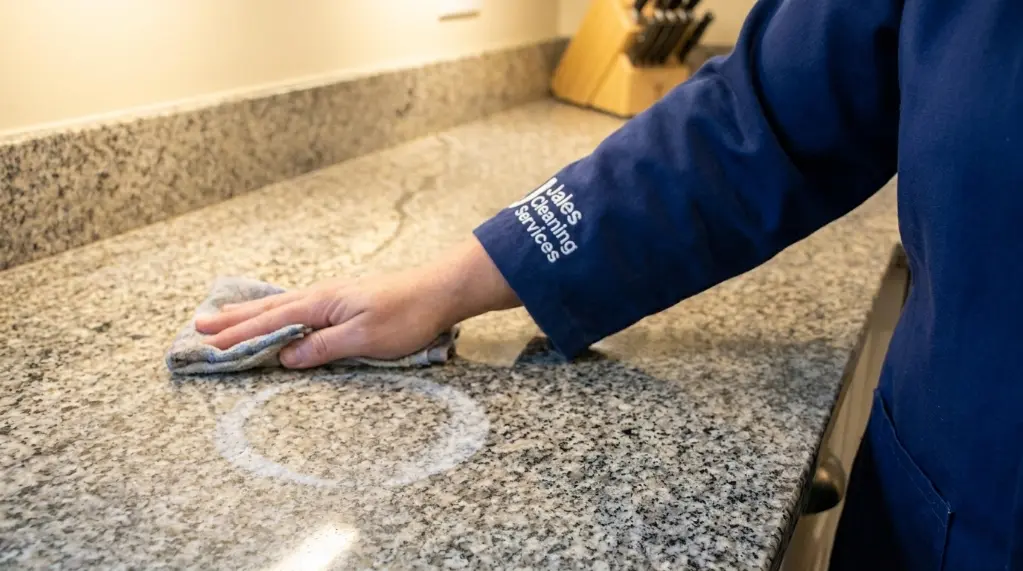
That cloudy white ring on your granite countertop, the one that showed up after a wet glass sat there overnight, is one of the most common questions homeowners search for help with. Learning how to remove water stains from granite starts with understanding what you’re actually dealing with, since not every mark is the same, and using the wrong method can make things worse instead of better.
This guide from Jales Cleaning Services, serving San Jose and the greater Bay Area, walks you through exactly how to remove water stains from granite countertops, sinks, floors, and tile, what causes them in the first place, and when a stain actually needs a professional instead of another DIY attempt.
Quick answer: Most water stains on granite are surface-level mineral deposits, not permanent damage. Clean the area with warm water and a few drops of mild dish soap, dry immediately, and if the stain remains, apply a baking soda paste, cover it with plastic wrap, and let it sit for 24 hours before wiping clean. Avoid vinegar, lemon juice, and other acidic cleaners, since they can etch granite permanently.
Table of Contents
What Causes Water Stains on Granite
Water stains on granite almost always come down to one thing: mineral-rich water sitting on the surface long enough to leave deposits behind as it evaporates. This is why homes with hard water tend to see these marks more often and more quickly than homes with softer water.
Common causes include:
- Wet glasses, cups, or bottles left standing on the counter
- Water pooling around a sink or faucet base
- A damp sponge or rag left sitting on the surface
- An unsealed or under-sealed granite surface, which absorbs moisture more easily
- Steam or condensation buildup near stovetops or kettles
Understanding the cause matters because it directly affects how to remove water stains from granite. Fresh mineral deposits usually lift easily, while stains that have been left to build up over weeks or months take more effort.
Are Water Stains on Granite Permanent
This is one of the most searched questions homeowners have, and the honest answer is: it depends on what kind of stain you’re actually looking at.
Surface mineral deposits (true water stains) sit on top of the granite’s sealant and are almost always removable with the right cleaning method, even if they’ve been there for a while.
Etch marks, which look similar but are caused by acidic liquids reacting with the stone itself, are a different problem entirely and are not always fully reversible with home cleaning methods.
If a mark wipes away easily with a damp cloth and mild soap, it’s likely a surface mineral deposit. If it feels slightly rough or dull to the touch even after cleaning, it may be an etch mark, which is addressed differently (see the definition block below).
How to Remove Water Stains from Granite: Step by Step
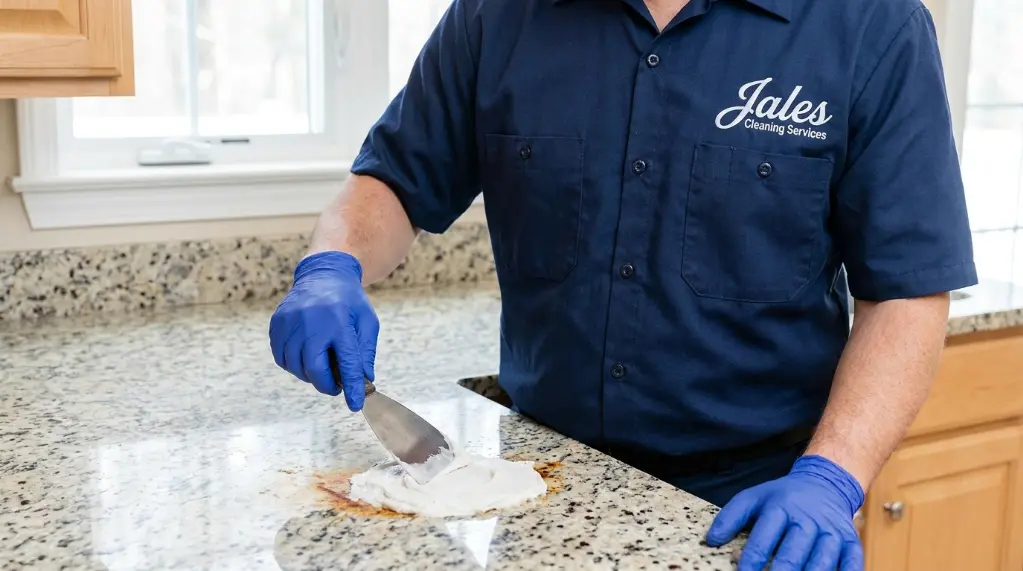
Here is exactly how to remove water stains from granite using the safest, most effective method for everyday mineral deposits.
Step 1: Clean the Area First
Wipe the stained area with warm water and a few drops of mild, pH-neutral dish soap using a soft cloth. Many fresh water stains lift with this step alone.
Step 2: Dry Completely
Dry the surface thoroughly with a clean, dry cloth. Leftover moisture can make it harder to tell if the stain is actually gone or just temporarily less visible.
Step 3: Make a Baking Soda Paste
If the stain remains, mix baking soda with a small amount of water to form a thick paste, about the consistency of peanut butter.
Step 4: Apply and Cover
Spread the paste over the stain, about a quarter-inch thick, and cover it with plastic wrap. Press the edges down gently to keep the paste from drying out too quickly.
Step 5: Let It Sit
Leave the covered paste in place for 24 hours. This gives the baking soda time to draw the mineral deposits up and out of the stone’s surface.
Step 6: Wipe Clean and Dry
Remove the plastic wrap, wipe away the dried paste with a damp cloth, then dry the area completely. If any residue remains, buff gently with a soft, dry cloth.
How to Remove Hard Water Stains from Granite Without Damaging It
Hard water stains, caused by high mineral content in tap water, tend to be more stubborn than a single splashed glass of water. Here’s how to remove hard water stains from granite without damaging it:
- Start with the same warm water and mild soap cleaning method used for regular water stains
- For persistent hard water buildup, use a granite-safe stone cleaner specifically formulated for mineral deposits rather than a general household cleaner
- Apply the baking soda paste method for stains that don’t respond to cleaning alone, extending the sit time to 48 hours for particularly stubborn buildup
- Never use scouring powders, steel wool, or abrasive scrub pads, since these can scratch the sealant and make future staining worse
- Once the stain is gone, reseal the area if the granite feels less water-resistant than the surrounding surface, since a worn sealant is often what allows hard water stains to set in the first place
How to Remove Water Stains from Granite Sink
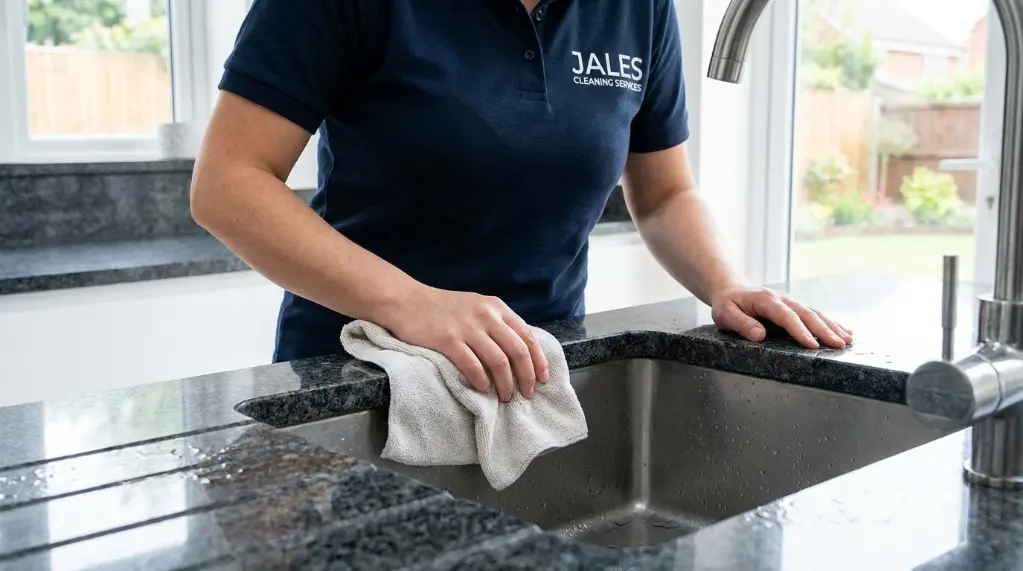
Granite sinks deal with constant water exposure, which makes them more prone to recurring stains than countertops.
- Rinse and dry the sink basin after each use rather than letting water air dry on its own, which is the single biggest factor in preventing new stains
- For existing stains, use the baking soda paste method, applying it directly into the basin and covering with plastic wrap as best you can around the sink’s contours
- Pay extra attention to the area around the drain and faucet base, where water tends to pool and mineral deposits build up fastest
- Reseal granite sinks slightly more often than countertops, since the surface handles more direct water contact
How to Remove Water Stains from Granite Floor and Tile
Water stains on granite floors and granite tile often come from mopping with too much water, foot traffic tracking in moisture, or bathroom humidity settling on the surface.
- Use a well-wrung mop rather than a soaking wet one, since excess standing water is the main cause of floor and tile staining
- For existing stains, the baking soda paste method works on floors and tiles the same way it does on countertops, though covering an entire floor stain with plastic wrap may require painter’s tape to hold the edges down
- In bathrooms or entryways with granite tile, improve ventilation where possible to reduce the humidity that contributes to recurring water marks
- Reseal granite floors and tile on a regular schedule, since foot traffic wears down sealant faster than it does on countertops
What Not to Use on Granite
Several common household products come up again and again in searches about granite cleaning, and most of them should be avoided.
- Vinegar: A frequently asked question is whether Dawn and vinegar remove hard water stains together. While the combination is popular for other surfaces, vinegar is acidic and can etch granite over time, so it’s best avoided entirely on natural stone.
- Lemon juice: Like vinegar, lemon juice is acidic and poses the same etching risk.
- Bleach: Bleach can discolor granite and break down the sealant, weakening the stone’s water resistance over time.
- WD-40: Despite appearing in online forums as a quick fix, WD-40 isn’t formulated for natural stone and can leave behind an oily residue that attracts more dirt.
- Abrasive powders or steel wool: These scratch the surface, creating tiny grooves where future stains and grime collect more easily.
Dawn dish soap, by contrast, is generally considered safe for granite when diluted and used in small amounts, since it’s pH-neutral and doesn’t contain the acidic properties that damage stone. Marble Institute of America’s care guidelines
DIY vs Professional Granite Stain Removal: Comparison Table
| Method | Best For | Cost | Effectiveness |
|---|---|---|---|
| Warm Water & Mild Soap | Fresh, light water stains | Under $2 | Good for recent stains |
| Baking Soda Paste (24-48 hr) | Set-in mineral deposits, hard water stains | Under $5 | Very good for most water stains |
| Granite-Safe Stone Cleaner | Recurring hard water buildup | $10–$20 per bottle | Good for maintenance and prevention |
| Professional Stone Restoration | Etch marks, deep staining, dulled sealant | Custom quote based on size and condition | Best overall, includes resealing |
For most water stains, the baking soda paste method resolves the issue without any cost beyond what’s already in your kitchen. Professional help becomes worthwhile when a mark doesn’t respond to cleaning at all, which often signals etching rather than a true water stain.
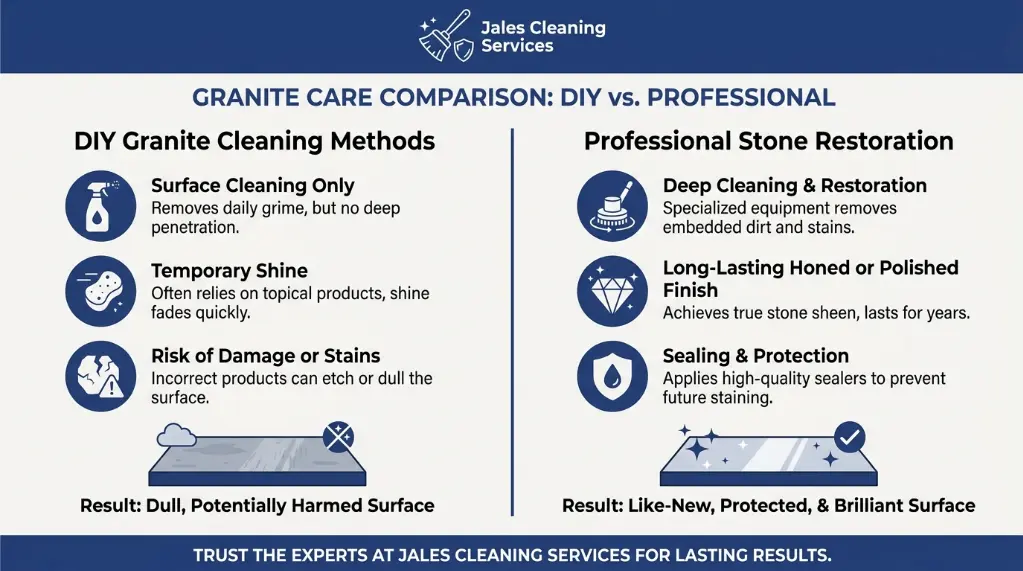
Common Mistakes That Make Granite Stains Worse
- Using vinegar or lemon juice, which are acidic and can etch the stone permanently rather than just clean the surface
- Scrubbing with abrasive pads, which scratches the sealant and creates grooves that attract future staining
- Letting water sit instead of drying promptly, which is the single most common cause of recurring water stains
- Skipping resealing, since a worn sealant is what allows water to penetrate and cause staining in the first place
- Assuming a stain is permanent without trying the baking soda method, since most true water stains are removable with patience rather than force
Water Stains vs Etch Marks?
A water stain on granite is a surface-level mineral deposit left behind when hard water evaporates, sitting on top of the stone care experts rather than penetrating it, which is why it’s typically removable with cleaning and a baking soda paste.An etch mark, by contrast, occurs when an acidic substance, such as vinegar, lemon juice, or wine, reacts chemically with the granite’s surface, dulling the polish at a microscopic level. Etch marks often look similar to water stains but feel slightly rough to the touch and generally require professional polishing rather than home cleaning methods, which is why correctly identifying which one you’re dealing with matters before choosing how to remove water stains from granite.Granite Care Tips for San Jose & Bay Area Homes
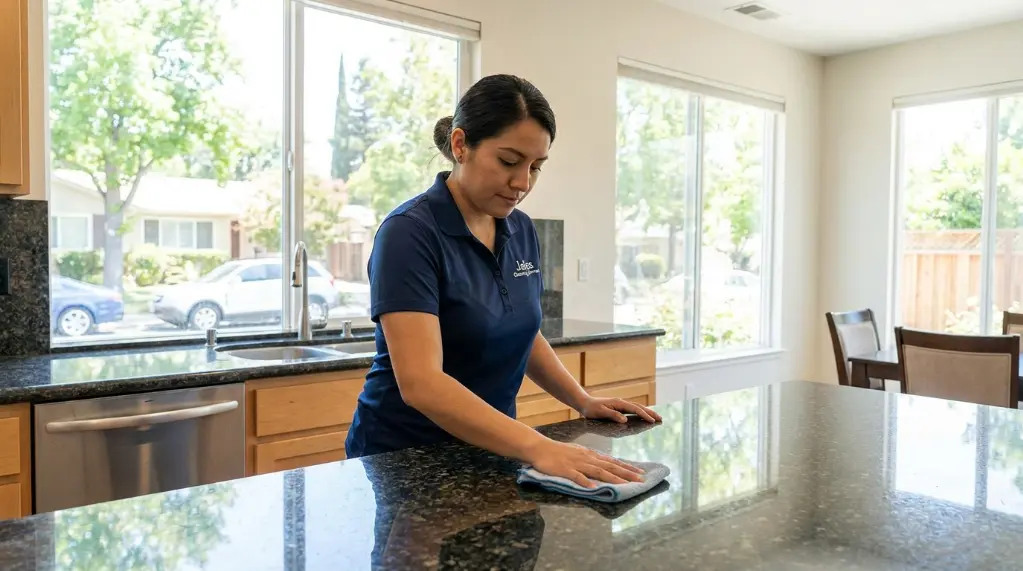
San Jose’s water tends to run harder than in many parts of the country, which means granite counters, sinks, and floors here are more prone to water staining than in regions with naturally softer water.
Homeowners across San Jose neighborhoods like Almaden Valley, Willow Glen, and Evergreen, as well as nearby Santa Clara, Cupertino, Sunnyvale, and Palo Alto, often see water stains reappear faster around kitchen sinks and bathroom vanities specifically because of the region’s mineral-heavy water supply, even on granite that’s properly sealed.
If your San Jose home has granite countertops or floors, resealing every 12 to 18 months, rather than the standard 1 to 3 year range recommended in lower hard-water areas, can meaningfully reduce how often water stains show up in the first place.
FAQs: How to Remove Water Stains from Granite
Final Thoughts
Knowing how to remove water stains from granite comes down to identifying what you’re dealing with, using gentle methods first, and being patient with the baking soda paste approach before assuming a mark is permanent. Most water stains, even stubborn hard water ones, respond well to consistent, correct treatment.
If your San Jose home’s granite needs more than a stain removal fix, or your whole kitchen could use a deep clean, Jales Cleaning Services is here for San Jose and Bay Area homeowners.